This website uses cookies to analyze site navigation and improve user experience.  We take your privacy seriously, and never collect any personally identifiable information, nor do we ever sell or share anonymized data with any third parties.  Click “Great!” to remove this banner.

Solar Moonshot Program - 2020 Highlights

Foundation
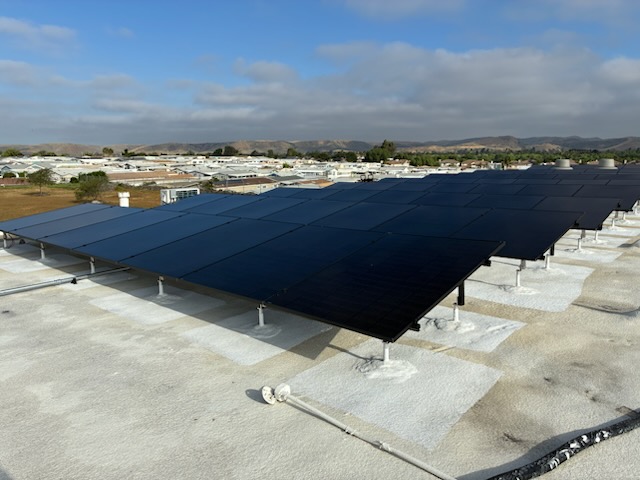
Image of a solar system at a farm that was supported by the Solar Moonshot Program

In 2020, Hammond Climate Solutions had the pleasure of working with 46 nonprofit organizations in 24 states, to collectively deploy 3,450kW of solar power with the aid of  $1,000,000 in Solar Moonshot Program grant funding.  

The diverse group Solar Moonshot Program participants included schools, indigenous tribes, intentional communities, community centers, climate-focused centers, places of worship, youth homeless shelters, farms, community solar gardens, a black women-run media company, and many other terrific community-based groups.

The origin of the Solar Moonshot Program stems from the altruistic work of a San Diego based philanthropist, who was combating the climate crisis through an independent initiative known as the “50 Solar States Project.”  As the name suggests, the initiative aimed to fund one solar project in each of the 50 U.S. states, in order to demonstrate the practicality of using renewable energy technology in every region of the country, and to be the impetus for further local adoption. 

In February of 2020, when Hammond Climate Solutions was hired to manage the 50 Solar States Program, the outlook on our climate was far more precarious.  Reflecting together upon those circumstances led to a tactical shift in the initiative’s mission, and would emphasize swift system energization as opposed to locale in order to maximize the renewable energy project’s potential impact on the environment.  With that, the Solar Moonshot Program was born. 


The 2020 goal for the Solar Moonshot Program was to assist approximately 40 nonprofit organizations afford the switch to solar (photovoltaic or thermal) with or without energy storage.  Priority was given to nonprofits that had the ability to move their solar projects forward in a timely fashion but required financial assistance to close funding gaps before proceeding.  The financial resources, provided by the Left Coast Fund, for the Solar Moonshot grants would be applied to a project’s funding in different ways, such as fundraiser-matching, down payments, a capital stack contribution, or to even cover the entire system cost for smaller projects.  The average grant for 2020’s program participants was $24,269 across 46 organizations. 


These renewable energy systems allow the nonprofits to save money that can be reinvested in fulfilling their missions while reducing harmful CO2 emissions that are contributing to the climate crisis, lessening local air pollution, and supporting regional green jobs.  The solar power systems also offer an opportunity to educate community members about the need for a just and livable future. 

A highlight of our 2020 program was the funding of our first solar thermal project, which was done in partnership with indigineous rights and climate justice advocate, Winona LaDuke.  The grant went towards six solar thermal units at White Earth Reservation in Minnesota, which were installed by local Indigineous folks through the nonprofit 8th Fire Solar. 

We have another $1,000,000 budget for the Solar Moonshot grants in 2021, which will help fund  renewable energy projects for about 40 nonprofit organizations across the nation. 

Nonprofits interested in applying for a Solar Moonshot Program grant can visit the website, www.solarmoonshot.org. Follow us on social media for our weekly #SolarSaturday posts, which highlight the amazing nonprofits going solar and helping make the world a better place.

Below is a list of all the organizations we’ve been delighted to help:


  • Jack's Solar Garden (pictured above) in Colorado
  • Red Bird Mission in Kentucky partnership with Mountain Association
  • Glass City Community Solar in Ohio 
  • Madison West High School in partnership with the The Midwest Renewable Energy Association in Wisconsin
  • Lincoln Park Solar Garden in Minnesota in partnership with Ecolibrium
  • Activist San Diego in California, installed by IBEW Local 569 union electricians with Aloha Solar Power
  • Kroka Expeditions in Marlow, New Hampshire
  • Ekvn-Yefolecv, an Indigenous community in Weogufka, Alabama
  • Northside Community Center run by the Community Action Network (CAN) in Ann Arbor, Michigan in partnership with the City Of Ann Arbor
  • Eau Claire Public Schools in Eau Claire, Wisconsin, in partnership with Eau Claire Public Schools Foundation
  • Center for Mindful Learning (Monastic Academy for the Preservation of Life on Earth) in Fletcher, Vermont
  • Canticle Farm in Oakland, California
  • White Earth Reservation installed by 8th Fire Solar in Minnesota
  • The DREAM Program in Winooski, Vermont
  • Wilmington Senior Center in Wilmington, California, in partnership with Wilmington Jaycees Foundation being installed by GRID Alternatives
  • The Ecology Center in San Juan Capistrano, California, being installed by IBEW Local 569 union electricians with Aloha Solar Power
  • Iron Works Cycling in Big Stone Gap, Virginia, in partnership with Appalachian Voices
  • Media Island International in Olympia, Washington, in partnership with Olympia Community Solar
  • The Workshop in Galena, Illinois
  • Church of the Holy Family Catholic Church in Virginia Beach,  Virginia
  • New Day Youth & Family Services in Albuquerque, New Mexico
  • UnityPoint Health Jones Regional Medical Center in Anamosa, Iowa
  • St. John's Episcoal Church in Westwood, Massachusetts
  • Commonweal in Bolinas, California
  • University Christian Church, home of the Climate Hub in San Diego, California, installed by IBEW Local 569 union electricians at Baker Electric Home Energy
  • Common Street Spiritual Center in Natick, Massachusetts
  • The Eco-Institute at Pickards Mountain in Chapel Hill, North Carolina
  • Sisters of the Holy Spirit and Mary Immaculate in San Antonio, Texas
  • El Costeño in Seattle, Washington, in partnership with the American Solar Energy Society
  • Centro PASO Aibonito in San Jose, Puerto Rico, in partnership with BQuest Foundation
  • South Boston Neighborhood Development Corporation in Boston, Massachusetts
  • Planting Justice in El Sobrante, California
  • Episcopal Diocese in Savannah, Georgia
  • Sacramento LGBT Community Center in Sacramento, California
  • Kathy's House in Milwaukee, Wisconsin
  • Trinity Church in Shelburne Falls, Massachusetts
  • Casa de Amparo in San Marcos, California, in partnership with BQuest Foundation
  • Boys Hope Girls Hope in Irvine, California
  • Congregation Beth Shalom of the Blue Hills in Milton, Massachusetts
  • Habitat for Humanity in La Crosse, Wisconsin
  • The LGBTQ Center Long Beach in Long Beach, California
  • Girl Scouts of America in Randolph, New Jersey
  • Northern California Land Trust / Peace Gardens in Berkeley, California, being installed by GRID Alternatives
  • Grace Church in Riverhead, New York
  • Humane Society of Marion County in Yelville, Arkansas
  • Second Baptist Church in Ypsilanti, Michigan 


2021 commitments thus far:

  • Solidarity Farm in Pauma Valley, California, in partnership with Circle of Life, being installed by IBEW Local 569 union electricians with Aloha Solar Power
  • Somerville Community Corporation in Somerville, Massachusetts
  • Innisfree Village in Crozet, Virginia 
  • St. Paul’s Visalia in Visalia, California 
  • NEST/SNAG Magazine in San Francisco, California  
  • Wildrock Farm in Crozet, Virginia 
  • St. Stephen’s Episcopal Church in Vestavia Hills, Alabama
  • Church of the Savior in Hanford, California 


Solar Moonshot Program in the news: 

All Posts

Category
Select field
Thank you! Your submission has been received!
Oops! Something went wrong while submitting the form.

Freedom Takes Root

Reflecting on Juneteenth, environmental justice and our shared responsibility to cultivate the conditions for life to thrive

Pictured Above: A photo Dan took of Former First Lady Michelle Obama’s presidential portrait by Amy Sherald at the Smithsonian Institution

“Even though the story has never been tidy, and Black folks have had to march and fight for every inch of our freedom, our story is nonetheless one of progress,” said Michelle Obama.

Today, we celebrate Juneteenth—the day in 1865 when the last enslaved Black Americans in Galveston, Texas learned they were free, more than two years after the Emancipation Proclamation had been signed. It is a day of remembrance, resilience, and unfinished work. A reminder that freedom delayed is freedom denied—and that liberation is something each generation is called to carry forward.

As we reflect today, we're invited to ask a deeper question: 

What does it truly mean to be free?

Perhaps freedom isn't only what we're liberated from.

Perhaps it's also what we're free to become.

To breathe deeply.

To drink clean water.

To take root.

To belong unapologetically.

To know that the place we call home has everything needed to sustain life—not only for ourselves, but for the countless beings with whom we share it.

Our lives are shaped by what's in the air.

By the water flowing through, around and beneath.

By the health of our soil and its smallest helpers.

By the canopies of our trees and all they shelter.

By the pollinators, fungi, oceans, rivers, and relationships—both human and more-than-human—that quietly make life possible every single day.

Liberation lives not only in our laws, but in our landscapes.

It lives in neighborhoods where children can safely play outside.

In rivers that run clean.

In forests of emerald green.

In communities resilient enough to weather storms together.

In the places we call home.

Because we have never existed apart from the living world.

When communities are burdened by pollution, chronic disinvestment or climate disasters, ecosystems suffer alongside them.

When forests disappear, waters are contaminated, species vanish, or soils are exhausted, people suffer too.

Our futures have always been intertwined.

Environmental justice reminds us that caring for people and caring for the Earth are not separate acts.

They are one and the same.

At Hammond Climate Solutions Foundation, we believe thriving is never the result of just one thing.

Healthy communities are built when clean energy, healthy ecosystems, affordable homes, public health, youth leadership, reliable transportation and strong relationships are woven together.

Because liberation is not simply the absence of injustice.

It is the presence of the conditions that allow life—in all its forms—to flourish.

This Juneteenth, may we honor those who fought for freedom by continuing to build a future where every person, every community, and every living being has the opportunity not only to survive, but to flourish and thrive.

Together. Ashe.

Read more

Community Members and Elected Officials Celebrate Clean Energy Resilience Project at Boys & Girls Clubs of South County's Imperial Beach Club

The new clean energy system will generate nearly half a million dollars in savings, strengthen emergency preparedness and support healthier futures for local youth and families.

Community leaders, elected officials, youth, labor partners, funders and local residents gathered Wednesday at the Boys & Girls Clubs of South County's Imperial Beach Club to celebrate the completion of a clean energy resilience project designed to strengthen community preparedness, reduce operating costs and create a healthier future for Imperial Beach families.

The project, a 25.5-kilowatt solar energy system paired with a 54-kilowatt-hour battery storage system, was installed by Aloha Solar Power, an International Brotherhood of Electrical Workers Local 569 union contractor, and made possible through a collaborative effort led by Hammond Climate Solutions Foundation and its partners. The system will help the Club continue serving youth and families during emergencies and power outages while strengthening community resilience and preparedness. The Club is expected to save approximately $12,000 in utility bills in its first year and more than $465,000 over the next 30 years, creating long-term financial benefits that will be reinvested into youth programs and services. 

"For many families, the Boys & Girls Club is much more than an after-school program — it's a safe and trusted space where young people learn, grow and build community," said Stephanie James,  chief executive director of the Boys & Girls Clubs of South County. "This investment strengthens our ability to support the children and families who rely on us every day while helping us prepare for whatever challenges the future may bring."

While Imperial Beach continues to face environmental challenges that have drawn regional, statewide and national attention, the event highlighted a different story — one of investment, partnership, dedication, community resilience and hope for a healthier future. Project partners celebrated a transformative investment that will create healthier environments, expand educational opportunities and strengthen long-term resilience for local youth and families.

"Today's ribbon cutting is about more than clean energy. It is about ensuring that this club can continue serving young people and families when they need it most," said Supervisor Paloma Aguirre, who represents District 1 on the San Diego County Board of Supervisors and previously served as mayor of Imperial Beach. "It also represents a commitment to environmental justice. Communities that have experienced the greatest environmental impacts should be among the first to benefit from clean energy investments and modern infrastructure, but we know that that is not always the case."

The project also creates opportunities for hands-on learning and workforce development, helping introduce young people to clean energy technologies and potential career pathways in sustainability and the skilled trades. Following the ribbon-cutting ceremony, Club youth participated in a hands-on solar oven demonstration led by Jim La Joie, inventor of the All Season Solar Cooker and founder of SolCook. The demonstration introduced youth to solar energy principles, solar cooking, and career opportunities in clean energy and sustainability.

While the ribbon-cutting marked the completion of the solar and battery project, partners emphasized that it also serves as a foundation for future investments in health, education and resilience that will benefit youth and families in Imperial Beach and beyond.

"While the ribbon-cutting marks the completion of an important project, the opportunities created by this investment extend far beyond today's celebration," said Tara Hammond, founder and executive director of Hammond Climate Solutions Foundation. "Through our Holistic Healthy Communities Pilot Program at the Club, we look forward to building on this foundation by advancing healthier indoor and outdoor environments, expanding climate education opportunities and helping create an even stronger, healthier and more resilient future for the youth and families served here."

The Boys & Girls Clubs of South County's clean energy resilience project was made possible through a collaborative effort involving Hammond Climate Solutions Foundation, BQuest Foundation, Aloha Solar Power, IBEW Local 569, San Diego Community Power in partnership with the San Diego Foundation and Calpine Community Energy, along with philanthropic partners, donors and community members committed to advancing equitable climate solutions in the South Bay.

Read more

Oceanside Greenhouse Gas Reduction Program Continues to Deliver Climate and Community Benefits

The Oceanside Greenhouse Gas Reduction Program is delivering measurable progress by advancing clean energy, reducing greenhouse gas emissions and investing in community-serving organizations across the city.

Oceanside, CA  — The Oceanside Greenhouse Gas Reduction Program is delivering measurable progress by advancing clean energy, reducing greenhouse gas emissions and investing in community-serving organizations across the city.

Launched in September 2025, the current phase  of the program is already nearing completion on multiple projects just six months in. Funded by Preserve Calavera in partnership with the San Diego Foundation and managed by Hammond Climate Solutions Foundation, the initiative is part of a broader effort to strengthen local climate action, build community resilience and advance equitable climate solutions. Funded projects include solar and battery installations for nonprofit facilities and low-income households, along with expanded food recovery efforts that reduce waste and emissions while increasing access to fresh, healthy food. 

At the Boys & Girls Clubs of Northwest San Diego’s Oceanside Clubhouse, critical pre-installation improvements have been completed, preparing the site for a solar and storage system that will reduce long-term electricity use and allow the organization to reinvest savings into youth programs. Investments in youth-serving organizations are also creating long-term community benefits and supporting local union jobs. “This gift is about so much more than solar panels. It’s an investment in our community, our future, and the young people who walk through our doors every day. By reducing our energy costs, we can direct more resources where they have the greatest impact supporting youth,” said Marineke Vandervort, CEO. 

Similarly, the North County Alano Club has begun installation of a solar and battery system that will significantly lower operating costs and emissions.

“Since the 1960s, the North County Alano Club has been helping alcoholics and other addicts recover from a seemingly hopeless state of mind and body — serving an average 4,000 people each month in 2025,” said Dan McSwain, a representative from the organization. “We rely 100% on donations, usually $1 at a time, and operate on a very tight budget. The result of this grant is reducing our overall expenses by 25 percent, allowing us to not only survive but thrive for decades to come.”

In addition to clean energy projects, the program is advancing climate and food equity through ProduceGood’s CropCircle Collective initiative, which has already recovered nearly 3,000 pounds of produce and is scaling operations across Oceanside.

“ProduceGood is focused on climate and social equity. Through the generous support of the Greenhouse Gas Reduction Program, the organization will increase food recovery by 100% in Oceanside while increasing access to fresh produce for hundreds of families.”

The program also expanded access to clean energy for low-income households. A few lucky families were able to have no-cost solar and battery systems installed in Oceanside’s Communities of Concern. These installations are expected to deliver more than 24 metric tons of annual greenhouse gas reductions while lowering energy bills and providing backup power during outages.

“Through the Oceanside Greenhouse Gas Reduction Program, this funding enables the delivery of no-cost solar plus battery systems to Oceanside households, directly reducing local emissions while strengthening community resilience,” said Ben Airth, Policy Director at Freedom Forever. “By keeping climate dollars in the community, the program helps lower electric bills and ensures families can maintain power when the grid is stressed. We are honored to work alongside Preserve Calavera and Hammond Climate Solutions Foundation to make these projects possible and hope this success paves the way for similar climate investments in other cities.”

These projects demonstrate how targeted, community-based climate investments can reduce emissions, lower costs, lessen stress on California’s aging electrical grid, offer energy resilience and deliver meaningful benefits to the community.

Additional announcements are expected as projects reach completion and further impacts are realized.

Read more