This website uses cookies to analyze site navigation and improve user experience.  We take your privacy seriously, and never collect any personally identifiable information, nor do we ever sell or share anonymized data with any third parties.  Click “Great!” to remove this banner.

California bill could restructure traditional incentive programs

Policy
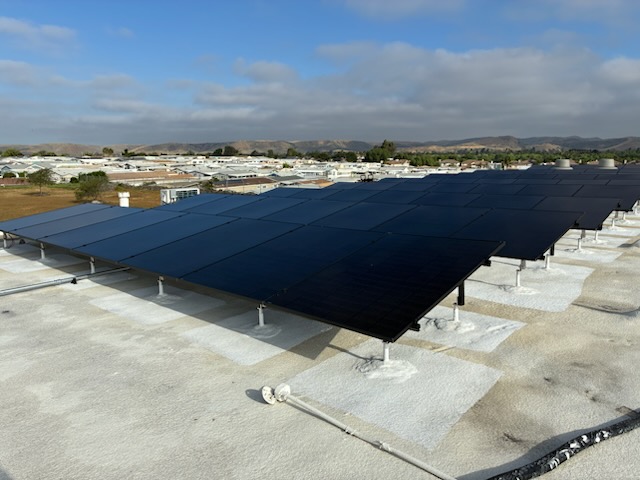
Villa Lakeshore Apartments in Lakeside, which BQuest provided a SOMAH bride loan for, allowing the property to install solar, which saves tenants $1,600 a year on utility bills

It is no secret that traditionally, clean energy infrastructure has primarily been accessible to wealthy homeowners in California. More than a million homes and businesses have rooftop solar, but the state’s environmental justice communities, which are in the most polluted areas, have been left out. In order to reach the state’s climate and clean energy goals, it is necessary to provide clean energy access to everyone and a big part of how we get there is programs. 

The Solar on Multifamily Affordable Housing (SOMAH) Program was created by California Assembly Bill (AB) 693 introduced by then Assemblymember Susan Eggman in 2016, which included the largest investment of its kind in the nation - $1 billion over the next decade from five of the state's gas and electric  investor-owned utility companies greenhouse gas cap-and-trade auction proceeds to subsidize solar panels on multifamily affordable housing across the state. For tenants, this means reduced utility bills, better housing security and job training opportunities. For housing complex owners, the solar reduces common area electricity costs, reducing overhead expenses. The program had a very successful launch, becoming fully subscribed within the first 24 hours of opening the program with more than 240 applications representing 74MW of solar capacity. However, after the successful launch, the program has experienced a significant decrease in applications in subsequent years, only receiving a total of 20 applications in 2022. 

A required third-party evaluation of the program identified a number of barriers to program participation. A major barrier cited from property owners was gap financing. SOMAH Program projects can be lengthy, and the current incentive structure requires the property owner to float the rebate amount, which can be thousands of dollars to hundreds of thousands of dollars, sometimes for a year. The program recognized this issue and rolled at progress payments, which paid a portion of the incentive for certain project milestones, but this simply is not enough for some property owners. Recognizing the need for gap financing in order for these projects to participate in the program, Hammond Climate Solutions Foundation and BQuest Foundation began working together to provide no interest bridge loans for SOMAH projects, providing much needed funds for projects that would have otherwise not moved forward. After funding a handful of projects, BQuest realized they could scale this opportunity a lot more quickly and reach many more property owners by creating a loan guarantee instead of financing these projects on a one by one basis. A loan guarantee would allow the property owner to access the rebate on the front end, backed by a loan guarantee from BQuest, without putting ratepayer money at risk and allowing BQuest to scale their impact. 

In February 2023, Senator Eggman introduced Senate Bill (SB) 355, which expanded SOMAH Program eligibility to include tribal housing, housing owned by public agencies and increased the income threshold among other things. At this point, Hammond Climate Solutions Foundation and BQuest had already been involved in numerous meetings with the SOMAH Program administrators, the California Public Utilities Commission (CPUC) energy division staff, the Governor’s Office and were actively involved in the SOMAH proceeding at the CPUC and while support for this idea was given by all parties, implementing something like this had proven to be slightly more difficult. Since SB 355 addressed the lack of applications in the SOMAH program and expanded eligibility, we met with Senator Eggman’s staff and proposed an amendment to the bill to include language for a loan guarantee and not only was the language added with no opposition, it was signed by Governor Newsom on October 7! 

This is a huge win for California and an opportunity to prove that incentive programs structured in a way that provides the rebate on the front end can work and will eliminate barriers to participation. You can read the full bill text here.     

All Posts

Category
Select field
Thank you! Your submission has been received!
Oops! Something went wrong while submitting the form.

Oceanside Greenhouse Gas Reduction Program Continues to Deliver Climate and Community Benefits

The Oceanside Greenhouse Gas Reduction Program is delivering measurable progress by advancing clean energy, reducing greenhouse gas emissions and investing in community-serving organizations across the city.

Oceanside, CA  — The Oceanside Greenhouse Gas Reduction Program is delivering measurable progress by advancing clean energy, reducing greenhouse gas emissions and investing in community-serving organizations across the city.

Launched in September 2025, the current phase  of the program is already nearing completion on multiple projects just six months in. Funded by Preserve Calavera in partnership with the San Diego Foundation and managed by Hammond Climate Solutions Foundation, the initiative is part of a broader effort to strengthen local climate action, build community resilience and advance equitable climate solutions. Funded projects include solar and battery installations for nonprofit facilities and low-income households, along with expanded food recovery efforts that reduce waste and emissions while increasing access to fresh, healthy food. 

At the Boys & Girls Clubs of Northwest San Diego’s Oceanside Clubhouse, critical pre-installation improvements have been completed, preparing the site for a solar and storage system that will reduce long-term electricity use and allow the organization to reinvest savings into youth programs. Investments in youth-serving organizations are also creating long-term community benefits and supporting local union jobs. “This gift is about so much more than solar panels. It’s an investment in our community, our future, and the young people who walk through our doors every day. By reducing our energy costs, we can direct more resources where they have the greatest impact supporting youth,” said Marineke Vandervort, CEO. 

Similarly, the North County Alano Club has begun installation of a solar and battery system that will significantly lower operating costs and emissions.

“Since the 1960s, the North County Alano Club has been helping alcoholics and other addicts recover from a seemingly hopeless state of mind and body — serving an average 4,000 people each month in 2025,” said Dan McSwain, a representative from the organization. “We rely 100% on donations, usually $1 at a time, and operate on a very tight budget. The result of this grant is reducing our overall expenses by 25 percent, allowing us to not only survive but thrive for decades to come.”

In addition to clean energy projects, the program is advancing climate and food equity through ProduceGood’s CropCircle Collective initiative, which has already recovered nearly 3,000 pounds of produce and is scaling operations across Oceanside.

“ProduceGood is focused on climate and social equity. Through the generous support of the Greenhouse Gas Reduction Program, the organization will increase food recovery by 100% in Oceanside while increasing access to fresh produce for hundreds of families.”

The program also expanded access to clean energy for low-income households. A few lucky families were able to have no-cost solar and battery systems installed in Oceanside’s Communities of Concern. These installations are expected to deliver more than 24 metric tons of annual greenhouse gas reductions while lowering energy bills and providing backup power during outages.

“Through the Oceanside Greenhouse Gas Reduction Program, this funding enables the delivery of no-cost solar plus battery systems to Oceanside households, directly reducing local emissions while strengthening community resilience,” said Ben Airth, Policy Director at Freedom Forever. “By keeping climate dollars in the community, the program helps lower electric bills and ensures families can maintain power when the grid is stressed. We are honored to work alongside Preserve Calavera and Hammond Climate Solutions Foundation to make these projects possible and hope this success paves the way for similar climate investments in other cities.”

These projects demonstrate how targeted, community-based climate investments can reduce emissions, lower costs, lessen stress on California’s aging electrical grid, offer energy resilience and deliver meaningful benefits to the community.

Additional announcements are expected as projects reach completion and further impacts are realized.

Read more

2025 Solar Moonshot Program Wrapped

In 2025, the Solar Moonshot Program took a major step forward, expanding our reach, deepening our impact and providing real savings to nonprofits across the country and internationally.

The Solar Moonshot Program helps schools, nonprofits, tribal organizations and community organizations overcome financial and technical barriers to solar adoption, delivering long-term savings and climate benefits where they matter most. 

In 2025, the Solar Moonshot Program took a major step forward, expanding our reach, deepening our impact and providing real savings to nonprofits across the country and internationally. In 2024, the Solar Moonshot Program supported 26 projects and deployed $x. In 2025, the program supported 63 projects, representing a 142% increase year-over-year, and deployed $x. We also surpassed our 200th grantee and over $4,00,000 in solar grants issued since the program's inception in 2020. 

2025 Solar Moonshot Program grantees were located in 16 states, reaching a wide range of communities across the United States, as well as three international projects in Mexico, the Philippines and Africa. Our grantees included school districts, libraries, tribal facilities, food pantries, medical facilities, homes for children and other nonprofit service providers providing vital services for Communities of Concern, organizations that often operate on tight margins but play an outsized role in community well being. Together, these investments unlocked around $600,000 in estimated savings directly to nonprofits, which translate into more predictable operating costs, protection from rising utility rates, and the ability to redirect resources toward mission-critical services like education, healthcare, cultural programming and community resilience. Each project contributes to reducing carbon emissions, supporting local clean energy jobs, progressing  local, state and national climate goals, helping organizations invest in staff and programs and provides an opportunity for the community to learn more about clean energy and lessening climate injustices. These clean energy projects are also reducing climate injustices, supporting regional grid stability and offering crucial back-up power during emergencies.  

The drastic jump in the amount of projects we were able to support signals the demand for clean energy solutions, which will only increase as federal tax credits will begin to diminish in 2026. We remain committed to processing applications as quickly as possible to help our grantees maximize available funding to make their solar dreams possible. 

"Our new solar system will help reduce operating costs for the Clinton Community Hall for decades into the future. We couldn’t have moved forward without the support of the Solar Moonshot Program. In addition to the generous financial support, their program is super accessible and the folks we worked with were so helpful throughout the process. Just such an amazing resource for smaller non-profit facilities like ours that might not otherwise be able to get solar installed.”

  • Clinton Community Hall, Washington 

“Funding through the Solar Moonshot Program provided support for our solar array on our new building. With this boost in funding, we were able to invest more deeply in mission-related aspects of our new space, including managing stormwater on site and planting native species, as well as developing educational exhibits and displays that communicate the importance of our work to protect the Newfound Watershed.”

  • Newfound Lake Region Association, New Hampshire

We are grateful to the program’s generous funders who make this impactful program possible, including our 2025 supporters: BQuest Foundation, San Diego Community Power in partnership with the San Diego Foundation and Calpine Energy, anonymous donors in California and Wisconsin and Palomar. 

To learn more about the program or to apply for a 2026 grant, visit www.solarmoonshot.org


Read more

Climate Propositions and Measures in San Diego County

In San Diego, a variety of propositions and initiatives have been introduced to confront climate challenges

As climate change and its consequences become increasingly apparent, local governments are urged to take proactive and preventive measures to address its impacts. In San Diego, a variety of propositions and initiatives have been introduced to confront climate challenges, ranging from renewable energy efforts to policies that may entail some focus on climate change-related issues. At Hammond Climate Solutions Foundation (HCSF), we continuously analyze these options to better understand what is best for our community and how we can expedite positive change toward a just and livable future. We believe that it’s essential for citizens to be informed about the options available on this year's 2024 ballot.

Proposition 4

In recent years, environmental groups and renewable energy advocates have pushed for increased investment in climate action, particularly after Gov. Gavin Newsom and the Legislature approved a $54.3 billion plan known as the "California Climate Commitment" in 2022. However, due to budget constraints, this commitment was scaled back to $44.6 billion for the current fiscal year.

Proposition 4 is a significant measure on California's ballot, proposing a $10 billion bond aimed at addressing the state's most pressing environmental challenges. If passed, the bond would provide funding for projects related to drought, flood prevention, wildfire mitigation, and sea-level rise, among other climate-related concerns. The initiative is part of California’s broader commitment to lead in climate action. However, the bond raises concerns about long-term financial implications, particularly given the state's existing deficit.

Key Goals

The largest portion of the bond, $3.8 billion, would be allocated to projects related to drought, flooding, and water supply. These funds aim to improve water availability and quality, reduce the risk of flooding, and upgrade water facilities. Specific initiatives include enhancing water recycling and transforming wastewater into potable water for homes and drinking.

In addition, $1.5 billion would go toward "Forest Health and Wildfire Prevention," focusing on strategies like tree thinning and the removal of overgrown vegetation to reduce wildfire risk, a particularly urgent issue for the state.

Another significant portion, $1.2 billion, would be used to address sea-level rise and coastal restoration efforts. The goal is to mitigate the risks posed by rising ocean levels and to protect coastal ecosystems and fish populations.

Other notable allocations include:
$1.2 billion for land conservation and habitat restoration.
$850 million for renewable energy infrastructure, including offshore wind energy.
$700 million for expanding and repairing local and state parks.
$450 million for reducing the impacts of extreme heat on communities.
$300 million to help farms respond to the effects of climate change and adopt sustainable agricultural practices.

Fiscal Impacts

While the proposed bond addresses a wide range of pressing environmental concerns, the financial implications for California’s taxpayers are significant. According to the Legislative Analyst’s Office (LAO), the state would incur an additional $400 million annually over the next 40 years to repay the bond, potentially increasing the state’s existing deficit. This comes at a time when California is already facing a projected $46.8 billion in its budget.

This could lead to difficult decisions in future budget allocations, as funds will need to be diverted to service the debt from the bond. While the environmental projects are undeniably important, voters will need to weigh these benefits against the financial strain that Proposition 4 could impose on the state’s economy​.

Balancing Climate Action and Fiscal Responsibility

Proposition 4 represents a critical investment in California’s climate future, but it also highlights the tension between taking immediate climate action and managing long-term fiscal health. The bond would finance necessary projects to combat drought, wildfires, sea-level rise, and other pressing environmental issues, potentially making California more resilient to climate change. However, the reliance on debt financing raises questions about whether the state can sustain these investments without exacerbating its fiscal problems.

Voters may also consider alternative approaches to achieving these climate goals without incurring additional debt. Options like community-based climate initiatives, rooftop solar projects, and more efficient water management could provide cost-effective and sustainable solutions. Proposition 4’s goals are well-aligned with California’s commitment to addressing climate change, but its reliance on debt may not be the most financially prudent path forward. Voters will need to carefully balance the need for immediate climate action with the state’s long-term fiscal responsibility​


Measure E

Measure E is a proposal by the City of San Diego to implement a 1% general transactions and use tax (sales tax) increase. If passed, this would raise the current sales tax in San Diego from 7.75% to 8.75%, with the potential to generate an estimated $400 million annually for the city’s General Fund. Unlike a special tax, which would be earmarked for specific purposes, Measure E is a general tax, meaning the revenue could be used for a wide variety of city services and initiatives.

The additional revenue could be critical for addressing major city needs, but it comes at a cost. The sales tax is regressive, meaning it disproportionately affects lower-income households who spend a larger percentage of their income on taxable goods. For San Diego residents already dealing with inflation and high costs of living, this could add to their financial burden, making the decision about Measure E a challenging one for voters.

Key Goals

The primary goal of Measure E is to generate additional revenue to fund the city’s broad array of public services, including:
Public Safety: Enhancing fire, police, and emergency services.
Infrastructure Repair: Allocating funds for the maintenance and improvement of streets, sidewalks, storm drains, and other city infrastructure.
City Services: Supporting parks, libraries, recreational facilities, and other community resources.

While there are no legally binding restrictions on how the funds will be spent, the city has indicated that the proceeds would be used to maintain or improve upon the existing level of services, rather than replacing current spending.

Fiscal Impacts

If Measure E is approved, the additional $400 million annually would boost the city’s financial resources, providing more flexibility to address both immediate needs and long-term projects. The new revenue would be subject to the same auditing and oversight as other General Fund revenues, with annual reports to the City Council ensuring accountability. This could allow for more sustained investments in infrastructure, public safety, and community programs.

However, the measure has sparked concerns about the potential burden on consumers, particularly low-income residents. Sales taxes are regressive, meaning they disproportionately impact lower-income households, who spend a larger percentage of their income on taxable goods. This could create financial strain for some residents, particularly in the context of economic challenges like inflation.

Balancing Climate Action and Fiscal Responsibility

Although Measure E is not explicitly tied to climate-related projects, the revenue it generates could be leveraged to support the city’s broader environmental and sustainability goals. For example, funds could be allocated to infrastructure improvements that enhance climate resilience, such as upgrading stormwater systems to handle extreme weather or investing in sustainable public spaces.

At the same time, the financial impact on residents must be considered. Sales taxes tend to disproportionately affect lower-income residents, and in a time of inflation and economic uncertainty, some may question whether the tax is the best approach. Still, the measure offers a way for the city to address infrastructure deficits and other challenges without relying on borrowing or incurring long-term debt, a contrast to Proposition 4’s bond-financed approach.
In addition, while the increased revenue could support long-term sustainability and resilience efforts, the regressive nature of the tax could exacerbate financial inequities. As with any tax proposal, voters will need to weigh the potential benefits to the potential city services and infrastructure against the economic impact on households, particularly those already struggling with the high cost of living.


Measure G

Measure G is a proposed half-cent sales tax increase on the November 5, 2024 ballot aimed at transforming transportation across San Diego County. The measure is expected to raise approximately $900 million annually, funding critical infrastructure improvements including fire protection, road maintenance, public transit, and environmental preservation. At Hammond Climate Solutions Foundation (HCSF), we have endorsed Measure G due to its alignment with sustainability goals and its potential to significantly enhance climate resilience.

Key Goals and Fund Allocation

Measure G prioritizes a wide range of transportation and environmental improvements, with funds allocated as follows:
50% toward major public transit infrastructure projects, promoting sustainable transportation and reducing traffic congestion.
27% for capital projects to improve road and highway traffic flow and community safety.
7% for local street maintenance and repair, addressing San Diego’s crumbling infrastructure.
12% for transit operations and maintenance within the Metropolitan Transit System and North County Transit District.
2% for the repair, rehabilitation, and replacement of infrastructure within the rail transit system.
2% or less allocated for general administrative services.

These funds would be placed into a “lockbox,” ensuring that they are used exclusively for the designated projects. If any funds are misused, the oversight committee can refer cases for criminal prosecution.

Fiscal Impacts

If approved, Measure G would raise the countywide sales tax to 8.75%. While this increase may pose a financial burden on some residents, particularly lower-income households, the long-term benefits could include reduced traffic, enhanced safety, and improved infrastructure. By securing additional state and federal matching funds, Measure G would maximize local investments in transportation and environmental sustainability, ensuring a more sustainable and expansive public transportation system.

Balancing Climate Action and Fiscal Responsibility

Measure G includes stringent fiscal safeguards such as independent citizen oversight, public transparency, and annual audits. All funds remain under local control, and for every dollar generated, two dollars in additional funding will be secured from state and federal sources, ensuring billions for local improvements.

At Hammond Climate Solutions Foundation, we endorse Measure G because it offers significant opportunities to advance climate action. The measure’s emphasis on expanding public transit infrastructure, protecting natural habitats, and improving transportation safety aligns with our mission to promote sustainability. It also addresses the increasing wildfire risk by improving evacuation routes in vulnerable areas.

While the proposed tax increase poses a financial consideration, the long-term benefits of improved roads, enhanced transportation safety, and stronger environmental protections make Measure G a vital investment in San Diego County’s future. Whether the measure will fully prioritize climate action remains to be seen, but its potential for positive, lasting environmental impact is undeniable.


With the 2024 ballot offering important decisions on a variety of issues, including those related to climate and infrastructure, it is crucial for voters to engage with the options available. These measures will have long-term implications for how San Diego will address environmental concerns, public safety, and community needs.

At Hammond Climate Solutions Foundation, we encourage all citizens to stay informed and take part in the voting process. Your participation helps shape the direction of our community and ensures that we continue working toward a sustainable future.

For more information on local ballot measures and how to vote, visit the San Diego County Elections website.

Read more