This website uses cookies to analyze site navigation and improve user experience.  We take your privacy seriously, and never collect any personally identifiable information, nor do we ever sell or share anonymized data with any third parties.  Click “Great!” to remove this banner.

California bill could restructure traditional incentive programs

Policy
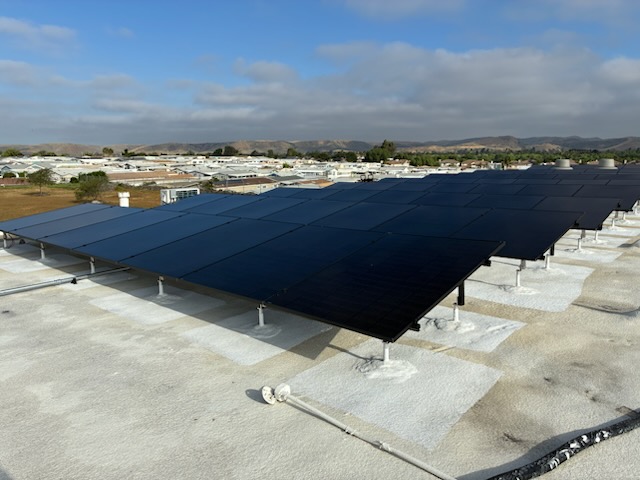
Villa Lakeshore Apartments in Lakeside, which BQuest provided a SOMAH bride loan for, allowing the property to install solar, which saves tenants $1,600 a year on utility bills

It is no secret that traditionally, clean energy infrastructure has primarily been accessible to wealthy homeowners in California. More than a million homes and businesses have rooftop solar, but the state’s environmental justice communities, which are in the most polluted areas, have been left out. In order to reach the state’s climate and clean energy goals, it is necessary to provide clean energy access to everyone and a big part of how we get there is programs. 

The Solar on Multifamily Affordable Housing (SOMAH) Program was created by California Assembly Bill (AB) 693 introduced by then Assemblymember Susan Eggman in 2016, which included the largest investment of its kind in the nation - $1 billion over the next decade from five of the state's gas and electric  investor-owned utility companies greenhouse gas cap-and-trade auction proceeds to subsidize solar panels on multifamily affordable housing across the state. For tenants, this means reduced utility bills, better housing security and job training opportunities. For housing complex owners, the solar reduces common area electricity costs, reducing overhead expenses. The program had a very successful launch, becoming fully subscribed within the first 24 hours of opening the program with more than 240 applications representing 74MW of solar capacity. However, after the successful launch, the program has experienced a significant decrease in applications in subsequent years, only receiving a total of 20 applications in 2022. 

A required third-party evaluation of the program identified a number of barriers to program participation. A major barrier cited from property owners was gap financing. SOMAH Program projects can be lengthy, and the current incentive structure requires the property owner to float the rebate amount, which can be thousands of dollars to hundreds of thousands of dollars, sometimes for a year. The program recognized this issue and rolled at progress payments, which paid a portion of the incentive for certain project milestones, but this simply is not enough for some property owners. Recognizing the need for gap financing in order for these projects to participate in the program, Hammond Climate Solutions Foundation and BQuest Foundation began working together to provide no interest bridge loans for SOMAH projects, providing much needed funds for projects that would have otherwise not moved forward. After funding a handful of projects, BQuest realized they could scale this opportunity a lot more quickly and reach many more property owners by creating a loan guarantee instead of financing these projects on a one by one basis. A loan guarantee would allow the property owner to access the rebate on the front end, backed by a loan guarantee from BQuest, without putting ratepayer money at risk and allowing BQuest to scale their impact. 

In February 2023, Senator Eggman introduced Senate Bill (SB) 355, which expanded SOMAH Program eligibility to include tribal housing, housing owned by public agencies and increased the income threshold among other things. At this point, Hammond Climate Solutions Foundation and BQuest had already been involved in numerous meetings with the SOMAH Program administrators, the California Public Utilities Commission (CPUC) energy division staff, the Governor’s Office and were actively involved in the SOMAH proceeding at the CPUC and while support for this idea was given by all parties, implementing something like this had proven to be slightly more difficult. Since SB 355 addressed the lack of applications in the SOMAH program and expanded eligibility, we met with Senator Eggman’s staff and proposed an amendment to the bill to include language for a loan guarantee and not only was the language added with no opposition, it was signed by Governor Newsom on October 7! 

This is a huge win for California and an opportunity to prove that incentive programs structured in a way that provides the rebate on the front end can work and will eliminate barriers to participation. You can read the full bill text here.     

All Posts

Category
Select field
Thank you! Your submission has been received!
Oops! Something went wrong while submitting the form.

Freedom Takes Root

Reflecting on Juneteenth, environmental justice and our shared responsibility to cultivate the conditions for life to thrive

Pictured Above: A photo Dan took of Former First Lady Michelle Obama’s presidential portrait by Amy Sherald at the Smithsonian Institution

“Even though the story has never been tidy, and Black folks have had to march and fight for every inch of our freedom, our story is nonetheless one of progress,” said Michelle Obama.

Today, we celebrate Juneteenth—the day in 1865 when the last enslaved Black Americans in Galveston, Texas learned they were free, more than two years after the Emancipation Proclamation had been signed. It is a day of remembrance, resilience, and unfinished work. A reminder that freedom delayed is freedom denied—and that liberation is something each generation is called to carry forward.

As we reflect today, we're invited to ask a deeper question: 

What does it truly mean to be free?

Perhaps freedom isn't only what we're liberated from.

Perhaps it's also what we're free to become.

To breathe deeply.

To drink clean water.

To take root.

To belong unapologetically.

To know that the place we call home has everything needed to sustain life—not only for ourselves, but for the countless beings with whom we share it.

Our lives are shaped by what's in the air.

By the water flowing through, around and beneath.

By the health of our soil and its smallest helpers.

By the canopies of our trees and all they shelter.

By the pollinators, fungi, oceans, rivers, and relationships—both human and more-than-human—that quietly make life possible every single day.

Liberation lives not only in our laws, but in our landscapes.

It lives in neighborhoods where children can safely play outside.

In rivers that run clean.

In forests of emerald green.

In communities resilient enough to weather storms together.

In the places we call home.

Because we have never existed apart from the living world.

When communities are burdened by pollution, chronic disinvestment or climate disasters, ecosystems suffer alongside them.

When forests disappear, waters are contaminated, species vanish, or soils are exhausted, people suffer too.

Our futures have always been intertwined.

Environmental justice reminds us that caring for people and caring for the Earth are not separate acts.

They are one and the same.

At Hammond Climate Solutions Foundation, we believe thriving is never the result of just one thing.

Healthy communities are built when clean energy, healthy ecosystems, affordable homes, public health, youth leadership, reliable transportation and strong relationships are woven together.

Because liberation is not simply the absence of injustice.

It is the presence of the conditions that allow life—in all its forms—to flourish.

This Juneteenth, may we honor those who fought for freedom by continuing to build a future where every person, every community, and every living being has the opportunity not only to survive, but to flourish and thrive.

Together. Ashe.

Read more

Community Members and Elected Officials Celebrate Clean Energy Resilience Project at Boys & Girls Clubs of South County's Imperial Beach Club

The new clean energy system will generate nearly half a million dollars in savings, strengthen emergency preparedness and support healthier futures for local youth and families.

Community leaders, elected officials, youth, labor partners, funders and local residents gathered Wednesday at the Boys & Girls Clubs of South County's Imperial Beach Club to celebrate the completion of a clean energy resilience project designed to strengthen community preparedness, reduce operating costs and create a healthier future for Imperial Beach families.

The project, a 25.5-kilowatt solar energy system paired with a 54-kilowatt-hour battery storage system, was installed by Aloha Solar Power, an International Brotherhood of Electrical Workers Local 569 union contractor, and made possible through a collaborative effort led by Hammond Climate Solutions Foundation and its partners. The system will help the Club continue serving youth and families during emergencies and power outages while strengthening community resilience and preparedness. The Club is expected to save approximately $12,000 in utility bills in its first year and more than $465,000 over the next 30 years, creating long-term financial benefits that will be reinvested into youth programs and services. 

"For many families, the Boys & Girls Club is much more than an after-school program — it's a safe and trusted space where young people learn, grow and build community," said Stephanie James,  chief executive director of the Boys & Girls Clubs of South County. "This investment strengthens our ability to support the children and families who rely on us every day while helping us prepare for whatever challenges the future may bring."

While Imperial Beach continues to face environmental challenges that have drawn regional, statewide and national attention, the event highlighted a different story — one of investment, partnership, dedication, community resilience and hope for a healthier future. Project partners celebrated a transformative investment that will create healthier environments, expand educational opportunities and strengthen long-term resilience for local youth and families.

"Today's ribbon cutting is about more than clean energy. It is about ensuring that this club can continue serving young people and families when they need it most," said Supervisor Paloma Aguirre, who represents District 1 on the San Diego County Board of Supervisors and previously served as mayor of Imperial Beach. "It also represents a commitment to environmental justice. Communities that have experienced the greatest environmental impacts should be among the first to benefit from clean energy investments and modern infrastructure, but we know that that is not always the case."

The project also creates opportunities for hands-on learning and workforce development, helping introduce young people to clean energy technologies and potential career pathways in sustainability and the skilled trades. Following the ribbon-cutting ceremony, Club youth participated in a hands-on solar oven demonstration led by Jim La Joie, inventor of the All Season Solar Cooker and founder of SolCook. The demonstration introduced youth to solar energy principles, solar cooking, and career opportunities in clean energy and sustainability.

While the ribbon-cutting marked the completion of the solar and battery project, partners emphasized that it also serves as a foundation for future investments in health, education and resilience that will benefit youth and families in Imperial Beach and beyond.

"While the ribbon-cutting marks the completion of an important project, the opportunities created by this investment extend far beyond today's celebration," said Tara Hammond, founder and executive director of Hammond Climate Solutions Foundation. "Through our Holistic Healthy Communities Pilot Program at the Club, we look forward to building on this foundation by advancing healthier indoor and outdoor environments, expanding climate education opportunities and helping create an even stronger, healthier and more resilient future for the youth and families served here."

The Boys & Girls Clubs of South County's clean energy resilience project was made possible through a collaborative effort involving Hammond Climate Solutions Foundation, BQuest Foundation, Aloha Solar Power, IBEW Local 569, San Diego Community Power in partnership with the San Diego Foundation and Calpine Community Energy, along with philanthropic partners, donors and community members committed to advancing equitable climate solutions in the South Bay.

Read more

Oceanside Greenhouse Gas Reduction Program Continues to Deliver Climate and Community Benefits

The Oceanside Greenhouse Gas Reduction Program is delivering measurable progress by advancing clean energy, reducing greenhouse gas emissions and investing in community-serving organizations across the city.

Oceanside, CA  — The Oceanside Greenhouse Gas Reduction Program is delivering measurable progress by advancing clean energy, reducing greenhouse gas emissions and investing in community-serving organizations across the city.

Launched in September 2025, the current phase  of the program is already nearing completion on multiple projects just six months in. Funded by Preserve Calavera in partnership with the San Diego Foundation and managed by Hammond Climate Solutions Foundation, the initiative is part of a broader effort to strengthen local climate action, build community resilience and advance equitable climate solutions. Funded projects include solar and battery installations for nonprofit facilities and low-income households, along with expanded food recovery efforts that reduce waste and emissions while increasing access to fresh, healthy food. 

At the Boys & Girls Clubs of Northwest San Diego’s Oceanside Clubhouse, critical pre-installation improvements have been completed, preparing the site for a solar and storage system that will reduce long-term electricity use and allow the organization to reinvest savings into youth programs. Investments in youth-serving organizations are also creating long-term community benefits and supporting local union jobs. “This gift is about so much more than solar panels. It’s an investment in our community, our future, and the young people who walk through our doors every day. By reducing our energy costs, we can direct more resources where they have the greatest impact supporting youth,” said Marineke Vandervort, CEO. 

Similarly, the North County Alano Club has begun installation of a solar and battery system that will significantly lower operating costs and emissions.

“Since the 1960s, the North County Alano Club has been helping alcoholics and other addicts recover from a seemingly hopeless state of mind and body — serving an average 4,000 people each month in 2025,” said Dan McSwain, a representative from the organization. “We rely 100% on donations, usually $1 at a time, and operate on a very tight budget. The result of this grant is reducing our overall expenses by 25 percent, allowing us to not only survive but thrive for decades to come.”

In addition to clean energy projects, the program is advancing climate and food equity through ProduceGood’s CropCircle Collective initiative, which has already recovered nearly 3,000 pounds of produce and is scaling operations across Oceanside.

“ProduceGood is focused on climate and social equity. Through the generous support of the Greenhouse Gas Reduction Program, the organization will increase food recovery by 100% in Oceanside while increasing access to fresh produce for hundreds of families.”

The program also expanded access to clean energy for low-income households. A few lucky families were able to have no-cost solar and battery systems installed in Oceanside’s Communities of Concern. These installations are expected to deliver more than 24 metric tons of annual greenhouse gas reductions while lowering energy bills and providing backup power during outages.

“Through the Oceanside Greenhouse Gas Reduction Program, this funding enables the delivery of no-cost solar plus battery systems to Oceanside households, directly reducing local emissions while strengthening community resilience,” said Ben Airth, Policy Director at Freedom Forever. “By keeping climate dollars in the community, the program helps lower electric bills and ensures families can maintain power when the grid is stressed. We are honored to work alongside Preserve Calavera and Hammond Climate Solutions Foundation to make these projects possible and hope this success paves the way for similar climate investments in other cities.”

These projects demonstrate how targeted, community-based climate investments can reduce emissions, lower costs, lessen stress on California’s aging electrical grid, offer energy resilience and deliver meaningful benefits to the community.

Additional announcements are expected as projects reach completion and further impacts are realized.

Read more