This website uses cookies to analyze site navigation and improve user experience.  We take your privacy seriously, and never collect any personally identifiable information, nor do we ever sell or share anonymized data with any third parties.  Click “Great!” to remove this banner.

Climate Policy Action - 2021 Highlights

Policy
Hammond Climate Solutions representative speaking at a Green New Deal press event

This year’s clean energy and climate justice policy advocacy was filled with ups, downs, wins and loses but the Hammond Climate Solutions team is grateful for the strides we were able to help with to ensure a just and livable future for all.  Here is a look back on our policy work in 2021, much of which was done with various partners that we’re grateful to be working with.


Our policy advocacy kicked off with the introduction of California Assembly Bill 1139 (AB 1139), introduced by Assemblymember Lorena Gonzalez in February 2021.  The bill is the most aggressive solar attack to date, and it would have made drastic changes to the rules for California’s net energy metering (NEM), the solar agreement, which would have resulted in payback periods for rooftop solar investments of over 45 years.  In addition to changes for new solar producers, the bill proposed these changes for all existing customers as well, changing the presumed protections for over 1.3 million solar producers statewide.  Our advocacy included meeting with the author of the bill and sponsors to advocate for changes, rallying voices in opposition when the bill was introduced in assembly committees and presentations to local and statewide organizations to collect sign-ons for multiple letters.  Thankfully, we were successful in defeating the bill and in rallying enough opposition locally that none of the six assembly members representing San Diego County, aside from the bill’s author, voted yes.  This was a huge victory as rooftop solar and energy storage is a key solution to stopping the climate crisis, lessening environmental racism, providing grid resilience and supporting green jobs! 


In between the small wins and fights, we have been leading a year-long fight to protect and expand access to rooftop solar during the California Public Utilities Commission (CPUC) proceeding to determine the future solar agreement in the Golden State.  Attacks from the California investor-owned utilities, Natural Resources Defense Council (which has a history of aligning with the monopoly utilities companies, which you can read about here) and other utility-aligned, anti-solar groups have resulted in a proposed decision to drastically reduce benefits for solar customers, making rooftop solar inaccessible to all but the very wealthy.  Hammond Climate Solutions has helped to build a grassroots coalition of environmental and climate organizations, schools, cities, elected officials and more who are all standing up to protect and expand access to rooftop solar.  Through our advocacy and coalition building, we have helped five cities in our region submit letters or resolutions to the CPUC and Governor Newsom, advocating for a strong net energy metering agreement, the agreement that has allowed rooftop solar to become increasingly accessible to working class families, schools, small businesses and nonprofits.  More information on the recently-proposed decision, its impacts and how you can help protect rooftop solar as a climate solution can be found here.


Alongside efforts to protect rooftop solar and expand solar access in communities of concern, locally we were also very involved with a coalition advocating for the City of San Diego to cut ties with a fossil fuel corporation when renewing its gas and electric franchise agreements, which was up for renewal for the second time in a century.  The gas and electric franchise agreements would have determined whether we could build a clean energy future or if we would have been locked into another long term agreement with dirty fossil fuels.  After calling in to countless city council and committee meetings, attending meetings with city council members and organizing rallies and press conferences, we were confident that San Diegans made their voices clear that the broken energy system under San Diego Gas & Electric (SDG&E) was not working, and after over an hour of public comments in opposition to awarding the franchise agreement to SDG&E, the city council disappointed us in a 6-3 vote.  SDG&E promised programs and funding in order to secure the franchise agreements, including a Solar Equity Fund to subsidize solar for low-income families, however after a few stakeholder meetings which Hammond Climate Solutions attended, there has not been any progress in moving the program forward.  We plan to stay engaged with helping shape the Solar Equity Fund to be as beneficial to San Diegans as possible. 


Other energy related advocacy efforts have also included advocating for cities and San Diego County to join San Diego Community Power (SDCP), San Diego’s largest community choice energy program.  This year, San Diego County and National City both joined SDCP, securing a pathway to 100 percent clean energy. 


Although the majority of our advocacy this year has been energy related, we were also involved in a number of wins for building electrification ordinances around the county.  Through our involvement in the San Diego Building Electrification Coalition, we were able to help in successfully urging Encinitas and Solana Beach to pass all electric building reach codes for new construction buildings, a huge win considering buildings make up a significant portion of the region’s greenhouse gas emissions.  In addition to securing building electrification ordinances, we have also helped in advocating for a regional transportation plan, a truly innovative and first of its kind plan that will bring our regional transportation system to where it should be, getting people out of their cars and into other modes of sustainable transportation.  Through our membership with the San Diego Green New Deal Alliance, we have also been advocating for zero carbon policies as well as family sustaining green jobs and a just transition for workers. 


While most of our advocacy and policy work was focused on local and statewide efforts, Hammond Climate Solutions was also involved in a federal advocacy effort in partnership with the California Green New Deal Coalition to encourage a federal infrastructure package that would not only provide much needed funding for failing infrastructure, but also provide funding for climate and resiliency efforts with a focus on creating good green jobs. 


Although this year has had climate activists on the defense fighting against utility attacks, we are hopeful next year will bring legislation and policies that can lead to a productive and meaningful 2022.  In addition to our success in our policy advocacy, we have also had success with the programs that Hammond Climate Solutions manages and with the San Diego Climate Hub collaborations.  To learn more about our other work throughout the year, visit our recent blog post, Celebrating Climate Action - 2021 Year in Review.

All Posts

Category
Select field
Thank you! Your submission has been received!
Oops! Something went wrong while submitting the form.

2025 Solar Moonshot Program Wrapped

In 2025, the Solar Moonshot Program took a major step forward, expanding our reach, deepening our impact and providing real savings to nonprofits across the country and internationally.

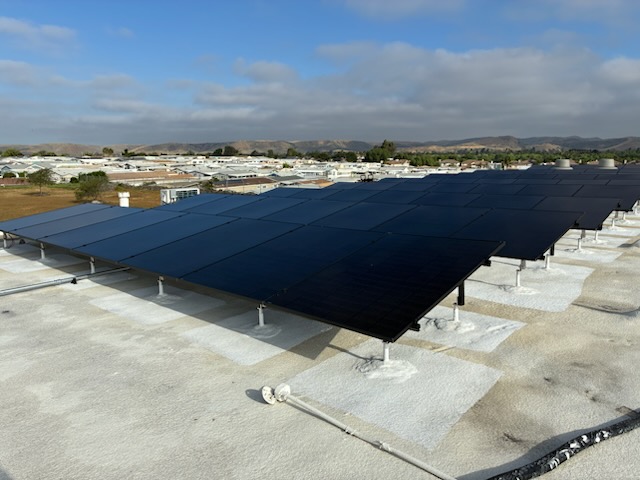
The Solar Moonshot Program helps schools, nonprofits, tribal organizations and community organizations overcome financial and technical barriers to solar adoption, delivering long-term savings and climate benefits where they matter most. 

In 2025, the Solar Moonshot Program took a major step forward, expanding our reach, deepening our impact and providing real savings to nonprofits across the country and internationally. In 2024, the Solar Moonshot Program supported 26 projects and deployed $x. In 2025, the program supported 63 projects, representing a 142% increase year-over-year, and deployed $x. We also surpassed our 200th grantee and over $4,00,000 in solar grants issued since the program's inception in 2020. 

2025 Solar Moonshot Program grantees were located in 16 states, reaching a wide range of communities across the United States, as well as three international projects in Mexico, the Philippines and Africa. Our grantees included school districts, libraries, tribal facilities, food pantries, medical facilities, homes for children and other nonprofit service providers providing vital services for Communities of Concern, organizations that often operate on tight margins but play an outsized role in community well being. Together, these investments unlocked around $600,000 in estimated savings directly to nonprofits, which translate into more predictable operating costs, protection from rising utility rates, and the ability to redirect resources toward mission-critical services like education, healthcare, cultural programming and community resilience. Each project contributes to reducing carbon emissions, supporting local clean energy jobs, progressing  local, state and national climate goals, helping organizations invest in staff and programs and provides an opportunity for the community to learn more about clean energy and lessening climate injustices. These clean energy projects are also reducing climate injustices, supporting regional grid stability and offering crucial back-up power during emergencies.  

The drastic jump in the amount of projects we were able to support signals the demand for clean energy solutions, which will only increase as federal tax credits will begin to diminish in 2026. We remain committed to processing applications as quickly as possible to help our grantees maximize available funding to make their solar dreams possible. 

"Our new solar system will help reduce operating costs for the Clinton Community Hall for decades into the future. We couldn’t have moved forward without the support of the Solar Moonshot Program. In addition to the generous financial support, their program is super accessible and the folks we worked with were so helpful throughout the process. Just such an amazing resource for smaller non-profit facilities like ours that might not otherwise be able to get solar installed.”

  • Clinton Community Hall, Washington 

“Funding through the Solar Moonshot Program provided support for our solar array on our new building. With this boost in funding, we were able to invest more deeply in mission-related aspects of our new space, including managing stormwater on site and planting native species, as well as developing educational exhibits and displays that communicate the importance of our work to protect the Newfound Watershed.”

  • Newfound Lake Region Association, New Hampshire

We are grateful to the program’s generous funders who make this impactful program possible, including our 2025 supporters: BQuest Foundation, San Diego Community Power in partnership with the San Diego Foundation and Calpine Energy, anonymous donors in California and Wisconsin and Palomar. 

To learn more about the program or to apply for a 2026 grant, visit www.solarmoonshot.org


Read more

Climate Propositions and Measures in San Diego County

In San Diego, a variety of propositions and initiatives have been introduced to confront climate challenges

As climate change and its consequences become increasingly apparent, local governments are urged to take proactive and preventive measures to address its impacts. In San Diego, a variety of propositions and initiatives have been introduced to confront climate challenges, ranging from renewable energy efforts to policies that may entail some focus on climate change-related issues. At Hammond Climate Solutions Foundation (HCSF), we continuously analyze these options to better understand what is best for our community and how we can expedite positive change toward a just and livable future. We believe that it’s essential for citizens to be informed about the options available on this year's 2024 ballot.

Proposition 4

In recent years, environmental groups and renewable energy advocates have pushed for increased investment in climate action, particularly after Gov. Gavin Newsom and the Legislature approved a $54.3 billion plan known as the "California Climate Commitment" in 2022. However, due to budget constraints, this commitment was scaled back to $44.6 billion for the current fiscal year.

Proposition 4 is a significant measure on California's ballot, proposing a $10 billion bond aimed at addressing the state's most pressing environmental challenges. If passed, the bond would provide funding for projects related to drought, flood prevention, wildfire mitigation, and sea-level rise, among other climate-related concerns. The initiative is part of California’s broader commitment to lead in climate action. However, the bond raises concerns about long-term financial implications, particularly given the state's existing deficit.

Key Goals

The largest portion of the bond, $3.8 billion, would be allocated to projects related to drought, flooding, and water supply. These funds aim to improve water availability and quality, reduce the risk of flooding, and upgrade water facilities. Specific initiatives include enhancing water recycling and transforming wastewater into potable water for homes and drinking.

In addition, $1.5 billion would go toward "Forest Health and Wildfire Prevention," focusing on strategies like tree thinning and the removal of overgrown vegetation to reduce wildfire risk, a particularly urgent issue for the state.

Another significant portion, $1.2 billion, would be used to address sea-level rise and coastal restoration efforts. The goal is to mitigate the risks posed by rising ocean levels and to protect coastal ecosystems and fish populations.

Other notable allocations include:
$1.2 billion for land conservation and habitat restoration.
$850 million for renewable energy infrastructure, including offshore wind energy.
$700 million for expanding and repairing local and state parks.
$450 million for reducing the impacts of extreme heat on communities.
$300 million to help farms respond to the effects of climate change and adopt sustainable agricultural practices.

Fiscal Impacts

While the proposed bond addresses a wide range of pressing environmental concerns, the financial implications for California’s taxpayers are significant. According to the Legislative Analyst’s Office (LAO), the state would incur an additional $400 million annually over the next 40 years to repay the bond, potentially increasing the state’s existing deficit. This comes at a time when California is already facing a projected $46.8 billion in its budget.

This could lead to difficult decisions in future budget allocations, as funds will need to be diverted to service the debt from the bond. While the environmental projects are undeniably important, voters will need to weigh these benefits against the financial strain that Proposition 4 could impose on the state’s economy​.

Balancing Climate Action and Fiscal Responsibility

Proposition 4 represents a critical investment in California’s climate future, but it also highlights the tension between taking immediate climate action and managing long-term fiscal health. The bond would finance necessary projects to combat drought, wildfires, sea-level rise, and other pressing environmental issues, potentially making California more resilient to climate change. However, the reliance on debt financing raises questions about whether the state can sustain these investments without exacerbating its fiscal problems.

Voters may also consider alternative approaches to achieving these climate goals without incurring additional debt. Options like community-based climate initiatives, rooftop solar projects, and more efficient water management could provide cost-effective and sustainable solutions. Proposition 4’s goals are well-aligned with California’s commitment to addressing climate change, but its reliance on debt may not be the most financially prudent path forward. Voters will need to carefully balance the need for immediate climate action with the state’s long-term fiscal responsibility​


Measure E

Measure E is a proposal by the City of San Diego to implement a 1% general transactions and use tax (sales tax) increase. If passed, this would raise the current sales tax in San Diego from 7.75% to 8.75%, with the potential to generate an estimated $400 million annually for the city’s General Fund. Unlike a special tax, which would be earmarked for specific purposes, Measure E is a general tax, meaning the revenue could be used for a wide variety of city services and initiatives.

The additional revenue could be critical for addressing major city needs, but it comes at a cost. The sales tax is regressive, meaning it disproportionately affects lower-income households who spend a larger percentage of their income on taxable goods. For San Diego residents already dealing with inflation and high costs of living, this could add to their financial burden, making the decision about Measure E a challenging one for voters.

Key Goals

The primary goal of Measure E is to generate additional revenue to fund the city’s broad array of public services, including:
Public Safety: Enhancing fire, police, and emergency services.
Infrastructure Repair: Allocating funds for the maintenance and improvement of streets, sidewalks, storm drains, and other city infrastructure.
City Services: Supporting parks, libraries, recreational facilities, and other community resources.

While there are no legally binding restrictions on how the funds will be spent, the city has indicated that the proceeds would be used to maintain or improve upon the existing level of services, rather than replacing current spending.

Fiscal Impacts

If Measure E is approved, the additional $400 million annually would boost the city’s financial resources, providing more flexibility to address both immediate needs and long-term projects. The new revenue would be subject to the same auditing and oversight as other General Fund revenues, with annual reports to the City Council ensuring accountability. This could allow for more sustained investments in infrastructure, public safety, and community programs.

However, the measure has sparked concerns about the potential burden on consumers, particularly low-income residents. Sales taxes are regressive, meaning they disproportionately impact lower-income households, who spend a larger percentage of their income on taxable goods. This could create financial strain for some residents, particularly in the context of economic challenges like inflation.

Balancing Climate Action and Fiscal Responsibility

Although Measure E is not explicitly tied to climate-related projects, the revenue it generates could be leveraged to support the city’s broader environmental and sustainability goals. For example, funds could be allocated to infrastructure improvements that enhance climate resilience, such as upgrading stormwater systems to handle extreme weather or investing in sustainable public spaces.

At the same time, the financial impact on residents must be considered. Sales taxes tend to disproportionately affect lower-income residents, and in a time of inflation and economic uncertainty, some may question whether the tax is the best approach. Still, the measure offers a way for the city to address infrastructure deficits and other challenges without relying on borrowing or incurring long-term debt, a contrast to Proposition 4’s bond-financed approach.
In addition, while the increased revenue could support long-term sustainability and resilience efforts, the regressive nature of the tax could exacerbate financial inequities. As with any tax proposal, voters will need to weigh the potential benefits to the potential city services and infrastructure against the economic impact on households, particularly those already struggling with the high cost of living.


Measure G

Measure G is a proposed half-cent sales tax increase on the November 5, 2024 ballot aimed at transforming transportation across San Diego County. The measure is expected to raise approximately $900 million annually, funding critical infrastructure improvements including fire protection, road maintenance, public transit, and environmental preservation. At Hammond Climate Solutions Foundation (HCSF), we have endorsed Measure G due to its alignment with sustainability goals and its potential to significantly enhance climate resilience.

Key Goals and Fund Allocation

Measure G prioritizes a wide range of transportation and environmental improvements, with funds allocated as follows:
50% toward major public transit infrastructure projects, promoting sustainable transportation and reducing traffic congestion.
27% for capital projects to improve road and highway traffic flow and community safety.
7% for local street maintenance and repair, addressing San Diego’s crumbling infrastructure.
12% for transit operations and maintenance within the Metropolitan Transit System and North County Transit District.
2% for the repair, rehabilitation, and replacement of infrastructure within the rail transit system.
2% or less allocated for general administrative services.

These funds would be placed into a “lockbox,” ensuring that they are used exclusively for the designated projects. If any funds are misused, the oversight committee can refer cases for criminal prosecution.

Fiscal Impacts

If approved, Measure G would raise the countywide sales tax to 8.75%. While this increase may pose a financial burden on some residents, particularly lower-income households, the long-term benefits could include reduced traffic, enhanced safety, and improved infrastructure. By securing additional state and federal matching funds, Measure G would maximize local investments in transportation and environmental sustainability, ensuring a more sustainable and expansive public transportation system.

Balancing Climate Action and Fiscal Responsibility

Measure G includes stringent fiscal safeguards such as independent citizen oversight, public transparency, and annual audits. All funds remain under local control, and for every dollar generated, two dollars in additional funding will be secured from state and federal sources, ensuring billions for local improvements.

At Hammond Climate Solutions Foundation, we endorse Measure G because it offers significant opportunities to advance climate action. The measure’s emphasis on expanding public transit infrastructure, protecting natural habitats, and improving transportation safety aligns with our mission to promote sustainability. It also addresses the increasing wildfire risk by improving evacuation routes in vulnerable areas.

While the proposed tax increase poses a financial consideration, the long-term benefits of improved roads, enhanced transportation safety, and stronger environmental protections make Measure G a vital investment in San Diego County’s future. Whether the measure will fully prioritize climate action remains to be seen, but its potential for positive, lasting environmental impact is undeniable.


With the 2024 ballot offering important decisions on a variety of issues, including those related to climate and infrastructure, it is crucial for voters to engage with the options available. These measures will have long-term implications for how San Diego will address environmental concerns, public safety, and community needs.

At Hammond Climate Solutions Foundation, we encourage all citizens to stay informed and take part in the voting process. Your participation helps shape the direction of our community and ensures that we continue working toward a sustainable future.

For more information on local ballot measures and how to vote, visit the San Diego County Elections website.

Read more
Rasool, 13, and his brother Waad, six, explore the cracked ground where there once was water in a village in the al-Ankour area of western Iraq [Alannah Travers/Al Jazeera]

Reforesting Iraq: Iraqi Government Plan Set Out to Plant Millions of Trees

Over the last four decades, Iraq has suffered a plethora of environmental consequences, made worse by the constant wars that have left the country with problems ranging from decaying infrastructure to contaminated water systems.

Over the last four decades, Iraq has suffered a plethora of environmental consequences, made worse by the constant wars that have left the country with problems ranging from decaying infrastructure to contaminated water systems. In recent years, however, the government has embarked on a nationwide initiative to combat the effects of climate change by planting millions of trees across much of the country’s arid landscape. These initiatives, supported by both local and international organizations such as the United Nations Country Team (UNCT), aim to mitigate the country’s environmental challenges, such as desertification, extreme heat, and air pollution. However, while the planting of trees is a crucial first step, the challenges of maintaining and sustaining these trees require continuous efforts from the responsible bodies such as government officials and community-led organizations, especially in a country that is facing several developmental challenges.

Baghdad’s goal to plant over 10 million trees as well as similar efforts in the autonomous region of Iraqi Kurdistan reflects a nationwide push to reduce greenhouse gas emissions and to restore Iraq’s diverse ecosystems. Such ecosystems have taken a huge hit, such as the loss of over 50% of forests in the Iraqi Kurdistan region (the Arab Weekly). These losses in forests and tree-covered areas are partly the result of the water crisis, instability that has led to an increase forest fires, and increased economic dependence on the cutting down of trees. In response, the planting of trees is meant to absorb carbon dioxide, making them a vital step in the country’s road to environmental sustainability. 

In addition to the effects on the environment, there has been a significant toll on human lives. According to a United Nations report, nearly 7 million Iraqis are facing a severe lack of safe, clean water​ (The World). The country’s two primary rivers, the Tigris and Euphrates, have experienced historically low levels due to upstream damming and prolonged droughts, both made worse by climate change.

The mass tree planting initiative is not just about greening Iraq’s arid landscape; it’s about creating sustainable ecosystems that can support both human and wildlife populations. Trees are known to absorb carbon dioxide, a key greenhouse gas, thus playing a vital role in global efforts to combat climate change. In Iraq, the reforestation plan is expected to sequester significant amounts of carbon, improve air quality, and restore degraded land.

However, planting trees is only half the battle. The success of Iraq’s reforestation efforts hinges on the country’s ability to ensure that these trees survive and thrive. Watering these newly planted trees is a critical aspect that is often overlooked in large-scale reforestation projects. In Iraq, where water resources are already under severe stress, this presents a significant challenge. 

One of the strategies being explored is the use of treated wastewater for irrigation. By recycling wastewater, Iraq could reduce the strain on its freshwater resources while providing the necessary hydration for its growing forests. Another approach involves the implementation of advanced irrigation techniques, such as drip irrigation, which minimizes water waste and ensures that water reaches the tree roots directly. In contrast, the Chairman of the Parliamentary Water and Agriculture Committee in an interview on Iraq state TV referred to the condition of agriculture in Iraq as similar to that during the time of “Hammurabi”, noting its reliance on archaic methods of irrigation.

In addition to water challenges, the quality and type of trees planted are crucial for long-term success. Not all trees are suited to Iraq's harsh environment, where extreme heat and dust storms are common. Medium-sized trees like the black wattle (Acacia decurrens), honey locust (Gleditsia triacanthos), and black locust (Robinia pseudoacacia) are more likely to tolerate these conditions. These species can survive in dry climates and provide valuable shade, which helps reduce the surface temperatures in urban areas. In contrast, palm and date trees, while the latter is iconic in Iraq, often require large amounts of water and offer limited shade, making them less ideal for extensive reforestation efforts in a country with a mostly arid climate like Iraq. 

Despite these efforts, experts warn that reforestation alone may not be enough to counter the severe impacts of climate change in Iraq. The country’s broader environmental policies must address issues such as water management, agricultural practices, and urban planning to create resilient and flourishing ecosystems. Without a comprehensive approach, the benefits of planting millions of trees could be undermined by continued environmental degradation at a rate higher than the planting of new trees can mitigate.

Moreover, community involvement and education are essential to the success of these reforestation projects. Local communities need to be empowered with the knowledge and tools to care for the trees and understand the long-term benefits of reforestation. This includes promoting awareness about the importance of conserving water, protecting newly planted areas, and reducing activities that contribute to deforestation and land degradation.

In conclusion, while Iraq’s commitment to planting millions of trees is a commendable step towards addressing the challenges posed by climate change, it is not a cure-all. The survival and growth of these trees depend on selective and careful planning, adequate water resources, and community engagement. As Iraq continues to battle the effects of climate change, it must adopt a holistic approach that integrates reforestation with broader environmental and sustainability initiatives to ensure a greener, more resilient future for all. Iraq’s future depends on comprehensive climate strategies that include adequate water management and policy reform. Given the country’s current political and economic challenges, these goals seem ambitious at best.

To learn more about Iraq's broader environmental strategy, you can explore the country’s blueprint for a greener future as supported by efforts from the United Nations Development Program. 

Read more