
This website uses cookies to analyze site navigation and improve user experience.  We take your privacy seriously, and never collect any personally identifiable information, nor do we ever sell or share anonymized data with any third parties.  Click “Great!” to remove this banner.

Climate Policy Action - 2021 Highlights

Policy
Hammond Climate Solutions representative speaking at a Green New Deal press event

This year’s clean energy and climate justice policy advocacy was filled with ups, downs, wins and loses but the Hammond Climate Solutions team is grateful for the strides we were able to help with to ensure a just and livable future for all.  Here is a look back on our policy work in 2021, much of which was done with various partners that we’re grateful to be working with.


Our policy advocacy kicked off with the introduction of California Assembly Bill 1139 (AB 1139), introduced by Assemblymember Lorena Gonzalez in February 2021.  The bill is the most aggressive solar attack to date, and it would have made drastic changes to the rules for California’s net energy metering (NEM), the solar agreement, which would have resulted in payback periods for rooftop solar investments of over 45 years.  In addition to changes for new solar producers, the bill proposed these changes for all existing customers as well, changing the presumed protections for over 1.3 million solar producers statewide.  Our advocacy included meeting with the author of the bill and sponsors to advocate for changes, rallying voices in opposition when the bill was introduced in assembly committees and presentations to local and statewide organizations to collect sign-ons for multiple letters.  Thankfully, we were successful in defeating the bill and in rallying enough opposition locally that none of the six assembly members representing San Diego County, aside from the bill’s author, voted yes.  This was a huge victory as rooftop solar and energy storage is a key solution to stopping the climate crisis, lessening environmental racism, providing grid resilience and supporting green jobs! 


In between the small wins and fights, we have been leading a year-long fight to protect and expand access to rooftop solar during the California Public Utilities Commission (CPUC) proceeding to determine the future solar agreement in the Golden State.  Attacks from the California investor-owned utilities, Natural Resources Defense Council (which has a history of aligning with the monopoly utilities companies, which you can read about here) and other utility-aligned, anti-solar groups have resulted in a proposed decision to drastically reduce benefits for solar customers, making rooftop solar inaccessible to all but the very wealthy.  Hammond Climate Solutions has helped to build a grassroots coalition of environmental and climate organizations, schools, cities, elected officials and more who are all standing up to protect and expand access to rooftop solar.  Through our advocacy and coalition building, we have helped five cities in our region submit letters or resolutions to the CPUC and Governor Newsom, advocating for a strong net energy metering agreement, the agreement that has allowed rooftop solar to become increasingly accessible to working class families, schools, small businesses and nonprofits.  More information on the recently-proposed decision, its impacts and how you can help protect rooftop solar as a climate solution can be found here.


Alongside efforts to protect rooftop solar and expand solar access in communities of concern, locally we were also very involved with a coalition advocating for the City of San Diego to cut ties with a fossil fuel corporation when renewing its gas and electric franchise agreements, which was up for renewal for the second time in a century.  The gas and electric franchise agreements would have determined whether we could build a clean energy future or if we would have been locked into another long term agreement with dirty fossil fuels.  After calling in to countless city council and committee meetings, attending meetings with city council members and organizing rallies and press conferences, we were confident that San Diegans made their voices clear that the broken energy system under San Diego Gas & Electric (SDG&E) was not working, and after over an hour of public comments in opposition to awarding the franchise agreement to SDG&E, the city council disappointed us in a 6-3 vote.  SDG&E promised programs and funding in order to secure the franchise agreements, including a Solar Equity Fund to subsidize solar for low-income families, however after a few stakeholder meetings which Hammond Climate Solutions attended, there has not been any progress in moving the program forward.  We plan to stay engaged with helping shape the Solar Equity Fund to be as beneficial to San Diegans as possible. 


Other energy related advocacy efforts have also included advocating for cities and San Diego County to join San Diego Community Power (SDCP), San Diego’s largest community choice energy program.  This year, San Diego County and National City both joined SDCP, securing a pathway to 100 percent clean energy. 


Although the majority of our advocacy this year has been energy related, we were also involved in a number of wins for building electrification ordinances around the county.  Through our involvement in the San Diego Building Electrification Coalition, we were able to help in successfully urging Encinitas and Solana Beach to pass all electric building reach codes for new construction buildings, a huge win considering buildings make up a significant portion of the region’s greenhouse gas emissions.  In addition to securing building electrification ordinances, we have also helped in advocating for a regional transportation plan, a truly innovative and first of its kind plan that will bring our regional transportation system to where it should be, getting people out of their cars and into other modes of sustainable transportation.  Through our membership with the San Diego Green New Deal Alliance, we have also been advocating for zero carbon policies as well as family sustaining green jobs and a just transition for workers. 


While most of our advocacy and policy work was focused on local and statewide efforts, Hammond Climate Solutions was also involved in a federal advocacy effort in partnership with the California Green New Deal Coalition to encourage a federal infrastructure package that would not only provide much needed funding for failing infrastructure, but also provide funding for climate and resiliency efforts with a focus on creating good green jobs. 


Although this year has had climate activists on the defense fighting against utility attacks, we are hopeful next year will bring legislation and policies that can lead to a productive and meaningful 2022.  In addition to our success in our policy advocacy, we have also had success with the programs that Hammond Climate Solutions manages and with the San Diego Climate Hub collaborations.  To learn more about our other work throughout the year, visit our recent blog post, Celebrating Climate Action - 2021 Year in Review.

All Posts

Category
Select field
Thank you! Your submission has been received!
Oops! Something went wrong while submitting the form.

Your Vote, Our Planet: Why Civic Participation Matters for a Just and Livable Future

From the energy powering our communities to the air we breathe and the water we drink, environmental policies shape our everyday lives. Elections give voters an opportunity to influence the decisions that affect our environment, public health and future generations.

From the energy powering our communities to the air we breathe and the water we drink, environmental policies shape our everyday lives. Elections give voters an opportunity to influence the decisions that affect our environment, public health and future generations. 

‍

Yet millions of Americans who care deeply about environmental protection do not consistently participate in elections.

‍

‍

The Missing Environmental Vote

‍

According to the Environmental Voter Project, around 11.2 million labeled environmentalists did not take part in the 2024 Presidential Election. Voter participation is often even lower in the midterm, state and local elections. This highlights the gap between environmental concern and civic participation, as well as the potential impact of increased voter engagement. 

‍

One initiative addressing this gap is Patagonia’s 11.2 Million Vote Project, which encourages people to help friends and family make plans to vote.  The company announced the commitment of up to $11.2 million in $100 credits towards Patagonia products or donation to the League of Conservation Voters for helping three people make voting plans. Affording to Patagonia, as of September 30th, 2026, around 500K people had made plans to vote in this year's election, and the incentive allocation was fully exhausted as of that date.

‍

‍

Climate Change Belongs in the Political Conversation

‍

Another important message emerging from environmental advocacy is that climate change should be more prioritized in political conversations.

‍

According to a September 2026 Environmental Voter Project poll, 59% of likely voters surveyed across eight battleground states wanted politicians to talk more about climate change and pollution, compared with 17% who wanted less discussion. Environmental concerns are relevant to discussions about public health, economic development, energy costs, infrastructure, agriculture and the long-term well-being of communities.

‍

Climate change affects more than the natural environment. It intersects with everyday issues that influence people's lives, making it an important subject for public discussion and legislative consideration.

‍

Voters deserve to know where candidates stand on environmental issues, what policies they support, and how they intend to address environmental challenges. Likewise, elected officials should understand that environmental protection is an issue voters may consider when evaluating candidates and proposed legislation.

‍

Keeping climate change in the conversation helps ensure that environmental policies, proposed solutions, and long-term consequences receive meaningful public attention.

‍

‍

Why Voting for Environmental Legislation Matters

‍

Environmental legislation and public funding decisions can influence conservation efforts, energy development, community resilience, pollution standards and climate initiatives for years to come.

‍

When researching candidates and ballot measures, voters can consider several important areas:

‍

  • Climate change and emissions: Policies addressing greenhouse gas emissions, climate resilience, and the transition to cleaner energy.
  • Renewable energy: Initiatives supporting solar, wind, and other renewable energy sources, along with energy efficiency.
  • Public lands protection: Legislation focused on preserving national parks, forests, oceans, wildlife habitats, and other natural resources.
  • Clean water and air: Policies designed to reduce pollution, protect drinking water, and improve environmental health.
  • Wildlife and biodiversity: Initiatives supporting habitat restoration, species conservation, and the protection of ecosystems.
  • Environmental justice: Policies addressing the disproportionate environmental burdens experienced by certain communities.
  • ‍

Voting with environmental issues in mind means looking beyond campaign slogans. It means researching candidates' voting records, understanding proposed legislation, reviewing ballot initiatives, and considering the potential environmental effects of different policy approaches.

‍

Being an informed voter also means evaluating the practical details of proposed solutions, including their costs, benefits, implementation, and long-term impact.

‍

‍

Overcoming Environmental Hopelessness and Apathy

‍

It is easy to feel overwhelmed by the scale of today's environmental challenges. Headlines about extreme weather, biodiversity loss, deforestation, and pollution can make the future seem uncertain.

‍

Sometimes, that uncertainty leads to hopelessness or the belief that one person's actions cannot make a meaningful difference.

‍

However, disengagement means giving up an opportunity to participate in decisions that affect our environment.

‍

Voting offers a constructive way to turn concern into civic participation. It gives individuals an opportunity to express their priorities and contribute to the public decisions that influence environmental policy.

‍

And participation does not have to stop with casting a ballot. We can encourage friends and family to register, share reliable voting resources, attend community meetings, contact elected representatives, and support local environmental initiatives.

‍

Collective participation helps bring environmental concerns into broader public discussions and keeps elected officials aware of the issues their constituents care about.

‍

‍

Creating a More Environmentally Responsible Future

‍

Environmental protection is a shared responsibility that requires participation from individuals, businesses, communities, and governments.

‍

Organizations such as Patagonia demonstrate how businesses can use their platforms to encourage environmental awareness and civic engagement. The 11.2 Million Vote Project illustrates how environmental organizations and businesses can encourage civic engagement and help people make plans to vote.

‍

At the same time, the message that climate change belongs in political conversations reminds us that environmental issues should remain part of the public dialogue. Voters should have opportunities to understand the environmental implications of proposed policies and make informed decisions about the future they want to help shape.

‍

No single election or piece of legislation will resolve every environmental challenge. Progress requires continued engagement, thoughtful policy discussions, accountability, and participation over time.

‍

‍

Your Voice Matters. Your Vote Matters

‍

If we want environmental protection, climate action, clean energy, and conservation to remain priorities, we need to make sure these issues are part of our democratic process.

‍

For reliable, nonpartisan election information, visit www.vote.gov to learn about voter registration. Start by learning about the candidates and initiatives on your ballot. Research their environmental positions, understand the legislation being proposed, and make a voting plan. Encourage others to participate and keep environmental issues part of everyday conversations.

‍

The 11.2 million environmentalists who did not vote in 2024 represent a significant reminder of the importance of participation. Caring about the planet is meaningful, but translating that concern into informed civic engagement creates another opportunity to influence its future.

‍

A sustainable future is shaped not only by the choices we make in our daily lives, but also by the policies and decisions we support through our participation in democracy.

‍

We cannot afford to let environmental concerns go unheard. Let's stay informed, stay engaged, and make our voices count.

‍

Your vote is more than a personal choice. It is an opportunity to participate in shaping the future of our planet.

‍

Links:

Patagonia's 11.2 Million Vote Project: www.patagonia.com/elections

Climate change and voter engagement: www.environmentalvoter.org/updates/2026BattlegroundPoll 
‍

Read more

Powering Possibilities: How One Connection Sparked Nonprofit Solar Projects Across San Diego County

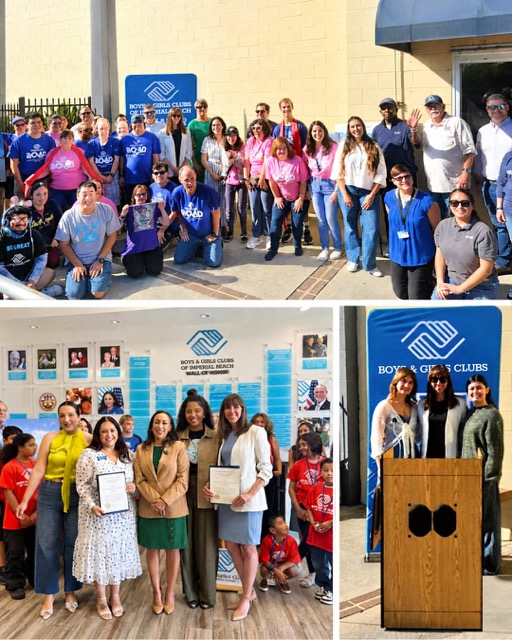
The Boys & Girls Clubs of Northwest San Diego celebrates a new solar power and battery storage system projected to save nearly $900,000, freeing up resources for youth development, food assistance and programs for adults with disabilities.

What began as a conversation about a potential grant opportunity has grown into a series of clean energy projects benefiting Boys & Girls Clubs across San Diego County.

‍

On October 27, Hammond Climate Solutions Foundation (HCSF) joined Boys & Girls Clubs of Northwest San Diego, Oceanside Deputy Mayor Eric Joyce, funding partners, club members and community members to celebrate the completion of a 50.4-kilowatt solar power system paired with 100 kilowatt-hours of battery storage at the Club's Oceanside location.

‍

The system is projected to save the nonprofit approximately $894,000 in utility costs over its 25-year expected lifetime, freeing up resources to support youth development, programs for adults with developmental disabilities and food assistance for community members experiencing food insecurity.

‍

But the story behind this project extends well beyond the solar installation.

‍

How One Connection Led to Another

‍

Our relationship with Boys & Girls Clubs of Northwest San Diego began when we reached out about a grant opportunity offered by an Oceanside-based foundation in 2024. Although that particular funding opportunity wasn't a fit for solar, the conversation opened the door to something bigger.

‍

The club introduced us to Boys & Girls Clubs of South County, where we began exploring opportunities to help reduce energy costs and expand access to clean energy through San Diego Community Power’s Community Clean Energy Grant Program.

‍

That connection ultimately led to us securing funding for the solar power and battery storage project at the Imperial Beach Club, where a 25.5-kilowatt solar power system and 54 kilowatt-hours of battery storage are helping the nonprofit reduce operating expenses and strengthen its long-term sustainability and resiliency.

‍

Meanwhile, another opportunity brought us back to Oceanside.

‍

When HCSF was asked to manage the Oceanside Greenhouse Gas Reduction Program, funded by Preserve Calavera in partnership with the San Diego Foundation, we reconnected with Boys & Girls Clubs of Northwest San Diego to let them know about the opportunity to apply for funding. Through our Solar Moonshot Program, we also secured two grants for the Oceanside project, including support from BQuest Foundation. This time, with new funding opportunities and partnerships in place, they were able to move the solar project forward with 100 percent of funding secured.

‍

What started as an unsuccessful grant opportunity had come full circle, demonstrating how maintaining relationships, connecting resources and pursuing new opportunities can turn an initial conversation into lasting community impact.

‍

Nearly $900,000 in Savings to Strengthen Community Services

‍

The newly-completed Oceanside solar power and battery storage system will generate clean, renewable electricity onsite, reduce greenhouse gas emissions and air pollution, and help the Club manage its long-term energy costs. The battery storage system also provides greater flexibility in managing electricity use.

‍

For an organization delivering essential community services, these savings represent much more than reduced utility bills.

‍

“This project is an investment in both sustainability and the future of our community,” said Marineke Vandervort, CEO of Boys & Girls Clubs of Northwest San Diego. “Every dollar saved on energy is a dollar we can redirect toward programs that change lives. We're incredibly grateful to Hammond Climate Solutions Foundation and our funding partners for helping us strengthen our impact for generations to come.”

‍

The Club's Oceanside location serves young people, adults with varying developmental abilities and families experiencing food insecurity. Its kitchen plays a particularly important role in nourishing the community while creating opportunities for youth.

‍

“Our kitchen does so much more than prepare meals,” said Kierstin O'Kelley, Culinary Director at Boys & Girls Clubs of Northwest San Diego. “Each month, our young culinary team helps provide 4,000 free meals to local youth while gaining valuable paid work experience. Investments like this help us focus more resources on what matters most—feeding our community and creating opportunities for the next generation.”

‍

By reducing one of the Club's significant operating expenses, the solar project will allow more resources to be directed toward these vital services for decades to come.

‍

Celebrating Community Collaboration and Local Jobs

‍

Oceanside Deputy Mayor Eric Joyce joined Club participants, including adults with disabilities, and community partners for the October 27 ribbon-cutting celebration.

‍

“It's exciting to see a project like this come to life right here in Oceanside,” said Deputy Mayor Eric Joyce. “When organizations work together, we can make clean energy more accessible and create real benefits for our community. My hope is that this inspires other nonprofits, schools, and local organizations to explore similar opportunities.”

‍

The project also supported local union jobs through its installation by Aloha Solar Power, a member of International Brotherhood of Electrical Workers Local 569.

‍

Beyond its immediate environmental and financial benefits, the installation creates opportunities to introduce young people to renewable energy technologies, environmental stewardship and potential careers in the growing clean energy sector.

‍

“This is what we're working toward: a future where clean energy investments don't just power buildings, but strengthen the organizations and communities inside them,” said Tara Hammond, founder and executive director of Hammond Climate Solutions Foundation. “With nearly $900,000 in projected savings, this project will help Boys & Girls Clubs of Northwest San Diego invest more resources in nourishing young people experiencing food insecurity, creating meaningful opportunities for adults with differing developmental abilities and expanding the essential services that make this Club such a vital community resource.”

‍

A Catalyst for Expanding Our Impact

‍

The relationships that began with this Oceanside opportunity have continued to grow.

‍

Since completing the Imperial Beach solar project, we've secured funding for another project at the Boys & Girls Clubs of South County's Chula Vista location, which will include a 19.36-kilowatt solar power system and 41.5 kilowatt-hours of battery storage. Recently-secured grants are also supporting electric transportation and electric vehicle charging stations at the Imperial Beach Club as well as climate education at both South County Clubs. 

‍

We're also now in conversations with a third Boys & Girls Club affiliate seeking funding for solar installations at multiple locations.

‍

These growing partnerships reflect something central to HCSF's approach: our work doesn't have to end with a single grant or solar installation.

‍

By developing deeper relationships with nonprofits, understanding their priorities and connecting them with funding and technical expertise, we can identify new opportunities to expand our collective impact.

‍

This philosophy also helped inspire our Holistic Healthy Communities initiative, which builds on clean energy investments to address broader community priorities, including healthier indoor environments, clean transportation, climate education and resilience. The pilot program is taking place at the Imperial Beach Club. 

‍

The Oceanside project was a catalyst for this expanding network of relationships and opportunities, showing how one connection can lead to multiple projects, new partnerships and greater benefits for communities.

‍

Building a More Just and Livable Future Together

‍

We're grateful to Boys & Girls Clubs of Northwest San Diego, Boys & Girls Clubs of South County, BQuest Foundation, Preserve Calavera, the San Diego Foundation, Aloha Solar Power, IBEW Local 569 and the many partners who have helped turn these opportunities into meaningful community investments.

‍

The success of this project reminds us that collaboration isn't just about bringing partners together for one installation. It's about building relationships that create opportunities for continued progress.

‍

When we invest in relationships alongside clean energy, the impact can extend far beyond a single project.

‍

Read more

Freedom Takes Root

Reflecting on Juneteenth, environmental justice and our shared responsibility to cultivate the conditions for life to thrive

Pictured Above: A photo Dan took of Former First Lady Michelle Obama’s presidential portrait by Amy Sherald at the Smithsonian Institution

‍

‍“Even though the story has never been tidy, and Black folks have had to march and fight for every inch of our freedom, our story is nonetheless one of progress,” said Michelle Obama.

‍

Today, we celebrate Juneteenth—the day in 1865 when the last enslaved Black Americans in Galveston, Texas learned they were free, more than two years after the Emancipation Proclamation had been signed. It is a day of remembrance, resilience, and unfinished work. A reminder that freedom delayed is freedom denied—and that liberation is something each generation is called to carry forward.

‍

As we reflect today, we're invited to ask a deeper question: 

‍

What does it truly mean to be free?

‍

‍

Perhaps freedom isn't only what we're liberated from.

‍

Perhaps it's also what we're free to become.

‍

To breathe deeply.

‍

To drink clean water.

‍

To take root.

‍

To belong unapologetically.

‍

To know that the place we call home has everything needed to sustain life—not only for ourselves, but for the countless beings with whom we share it.

‍

Our lives are shaped by what's in the air.

‍

By the water flowing through, around and beneath.

‍

By the health of our soil and its smallest helpers.

‍

By the canopies of our trees and all they shelter.

‍

By the pollinators, fungi, oceans, rivers, and relationships—both human and more-than-human—that quietly make life possible every single day.

‍

Liberation lives not only in our laws, but in our landscapes.

‍

It lives in neighborhoods where children can safely play outside.

‍

In rivers that run clean.

‍

In forests of emerald green.

‍

In communities resilient enough to weather storms together.

‍

In the places we call home.

‍

Because we have never existed apart from the living world.

‍

When communities are burdened by pollution, chronic disinvestment or climate disasters, ecosystems suffer alongside them.

‍

When forests disappear, waters are contaminated, species vanish, or soils are exhausted, people suffer too.

‍

Our futures have always been intertwined.

‍

Environmental justice reminds us that caring for people and caring for the Earth are not separate acts.

‍

They are one and the same.

‍

At Hammond Climate Solutions Foundation, we believe thriving is never the result of just one thing.

‍

Healthy communities are built when clean energy, healthy ecosystems, affordable homes, public health, youth leadership, reliable transportation and strong relationships are woven together.

‍

Because liberation is not simply the absence of injustice.

‍

It is the presence of the conditions that allow life—in all its forms—to flourish.

‍

This Juneteenth, may we honor those who fought for freedom by continuing to build a future where every person, every community, and every living being has the opportunity not only to survive, but to flourish and thrive.

‍

Together. Ashe.

Read more