This website uses cookies to analyze site navigation and improve user experience.  We take your privacy seriously, and never collect any personally identifiable information, nor do we ever sell or share anonymized data with any third parties.  Click “Great!” to remove this banner.

Powering Possibilities: How One Connection Sparked Nonprofit Solar Projects Across San Diego County

Foundation

What began as a conversation about a potential grant opportunity has grown into a series of clean energy projects benefiting Boys & Girls Clubs across San Diego County.

‍

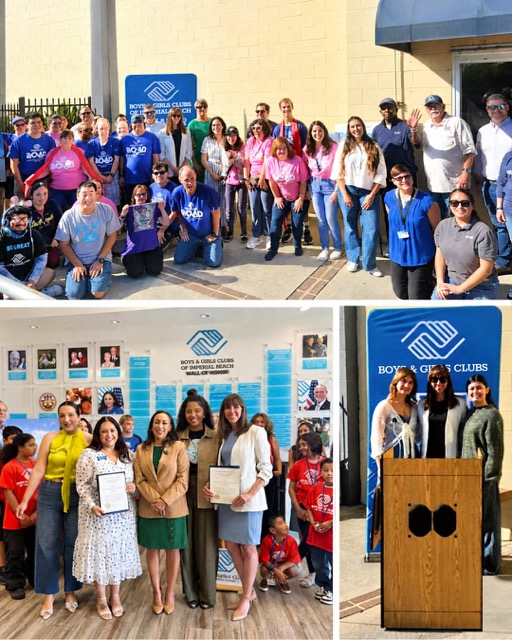
On October 27, Hammond Climate Solutions Foundation (HCSF) joined Boys & Girls Clubs of Northwest San Diego, Oceanside Deputy Mayor Eric Joyce, funding partners, club members and community members to celebrate the completion of a 50.4-kilowatt solar power system paired with 100 kilowatt-hours of battery storage at the Club's Oceanside location.

‍

The system is projected to save the nonprofit approximately $894,000 in utility costs over its 25-year expected lifetime, freeing up resources to support youth development, programs for adults with developmental disabilities and food assistance for community members experiencing food insecurity.

‍

But the story behind this project extends well beyond the solar installation.

‍

How One Connection Led to Another

‍

Our relationship with Boys & Girls Clubs of Northwest San Diego began when we reached out about a grant opportunity offered by an Oceanside-based foundation in 2024. Although that particular funding opportunity wasn't a fit for solar, the conversation opened the door to something bigger.

‍

The club introduced us to Boys & Girls Clubs of South County, where we began exploring opportunities to help reduce energy costs and expand access to clean energy through San Diego Community Power’s Community Clean Energy Grant Program.

‍

That connection ultimately led to us securing funding for the solar power and battery storage project at the Imperial Beach Club, where a 25.5-kilowatt solar power system and 54 kilowatt-hours of battery storage are helping the nonprofit reduce operating expenses and strengthen its long-term sustainability and resiliency.

‍

Meanwhile, another opportunity brought us back to Oceanside.

‍

When HCSF was asked to manage the Oceanside Greenhouse Gas Reduction Program, funded by Preserve Calavera in partnership with the San Diego Foundation, we reconnected with Boys & Girls Clubs of Northwest San Diego to let them know about the opportunity to apply for funding. Through our Solar Moonshot Program, we also secured two grants for the Oceanside project, including support from BQuest Foundation. This time, with new funding opportunities and partnerships in place, they were able to move the solar project forward with 100 percent of funding secured.

‍

What started as an unsuccessful grant opportunity had come full circle, demonstrating how maintaining relationships, connecting resources and pursuing new opportunities can turn an initial conversation into lasting community impact.

‍

Nearly $900,000 in Savings to Strengthen Community Services

‍

The newly-completed Oceanside solar power and battery storage system will generate clean, renewable electricity onsite, reduce greenhouse gas emissions and air pollution, and help the Club manage its long-term energy costs. The battery storage system also provides greater flexibility in managing electricity use.

‍

For an organization delivering essential community services, these savings represent much more than reduced utility bills.

‍

“This project is an investment in both sustainability and the future of our community,” said Marineke Vandervort, CEO of Boys & Girls Clubs of Northwest San Diego. “Every dollar saved on energy is a dollar we can redirect toward programs that change lives. We're incredibly grateful to Hammond Climate Solutions Foundation and our funding partners for helping us strengthen our impact for generations to come.”

‍

The Club's Oceanside location serves young people, adults with varying developmental abilities and families experiencing food insecurity. Its kitchen plays a particularly important role in nourishing the community while creating opportunities for youth.

‍

“Our kitchen does so much more than prepare meals,” said Kierstin O'Kelley, Culinary Director at Boys & Girls Clubs of Northwest San Diego. “Each month, our young culinary team helps provide 4,000 free meals to local youth while gaining valuable paid work experience. Investments like this help us focus more resources on what matters most—feeding our community and creating opportunities for the next generation.”

‍

By reducing one of the Club's significant operating expenses, the solar project will allow more resources to be directed toward these vital services for decades to come.

‍

Celebrating Community Collaboration and Local Jobs

‍

Oceanside Deputy Mayor Eric Joyce joined Club participants, including adults with disabilities, and community partners for the October 27 ribbon-cutting celebration.

‍

“It's exciting to see a project like this come to life right here in Oceanside,” said Deputy Mayor Eric Joyce. “When organizations work together, we can make clean energy more accessible and create real benefits for our community. My hope is that this inspires other nonprofits, schools, and local organizations to explore similar opportunities.”

‍

The project also supported local union jobs through its installation by Aloha Solar Power, a member of International Brotherhood of Electrical Workers Local 569.

‍

Beyond its immediate environmental and financial benefits, the installation creates opportunities to introduce young people to renewable energy technologies, environmental stewardship and potential careers in the growing clean energy sector.

‍

“This is what we're working toward: a future where clean energy investments don't just power buildings, but strengthen the organizations and communities inside them,” said Tara Hammond, founder and executive director of Hammond Climate Solutions Foundation. “With nearly $900,000 in projected savings, this project will help Boys & Girls Clubs of Northwest San Diego invest more resources in nourishing young people experiencing food insecurity, creating meaningful opportunities for adults with differing developmental abilities and expanding the essential services that make this Club such a vital community resource.”

‍

A Catalyst for Expanding Our Impact

‍

The relationships that began with this Oceanside opportunity have continued to grow.

‍

Since completing the Imperial Beach solar project, we've secured funding for another project at the Boys & Girls Clubs of South County's Chula Vista location, which will include a 19.36-kilowatt solar power system and 41.5 kilowatt-hours of battery storage. Recently-secured grants are also supporting electric transportation and electric vehicle charging stations at the Imperial Beach Club as well as climate education at both South County Clubs. 

‍

We're also now in conversations with a third Boys & Girls Club affiliate seeking funding for solar installations at multiple locations.

‍

These growing partnerships reflect something central to HCSF's approach: our work doesn't have to end with a single grant or solar installation.

‍

By developing deeper relationships with nonprofits, understanding their priorities and connecting them with funding and technical expertise, we can identify new opportunities to expand our collective impact.

‍

This philosophy also helped inspire our Holistic Healthy Communities initiative, which builds on clean energy investments to address broader community priorities, including healthier indoor environments, clean transportation, climate education and resilience. The pilot program is taking place at the Imperial Beach Club. 

‍

The Oceanside project was a catalyst for this expanding network of relationships and opportunities, showing how one connection can lead to multiple projects, new partnerships and greater benefits for communities.

‍

Building a More Just and Livable Future Together

‍

We're grateful to Boys & Girls Clubs of Northwest San Diego, Boys & Girls Clubs of South County, BQuest Foundation, Preserve Calavera, the San Diego Foundation, Aloha Solar Power, IBEW Local 569 and the many partners who have helped turn these opportunities into meaningful community investments.

‍

The success of this project reminds us that collaboration isn't just about bringing partners together for one installation. It's about building relationships that create opportunities for continued progress.

‍

When we invest in relationships alongside clean energy, the impact can extend far beyond a single project.

‍

All Posts

Category
Select field
Thank you! Your submission has been received!
Oops! Something went wrong while submitting the form.
Woman holding hands in a heart shape around the sun during a sunset

Sustainability Intention Setting for the New Year

New Year's resolutions likely will look different this year, if they haven’t been written off entirely as we grapple with the heavy effects of the continued pandemic. The past year has shown us how important it is to take time to decompress and make space for productivity being less of a priority during a global pandemic that has rippled effects in public health, physically, mentally and emotionally. While this is still the case now, entering a new year is a great time to set intentions and think about the year ahead. 

New Year's resolutions likely will look different this year, if they haven’t been written off entirely as we grapple with the heavy effects of the continued pandemic. The past year has shown us how important it is to take time to decompress and make space for productivity being less of a priority during a global pandemic that has rippled effects in public health, physically, mentally and emotionally. While this is still the case now, entering a new year is a great time to set intentions and think about the year ahead. 


We’re thinking about the ways we can be sustainable in 2021 that are also sustainable in the midst of the pandemic. Here are our favorites if you, too, need some inspiration to combat the climate crisis this year:


  • Transition to a low-waste lifestyle: in order to make wasteless habits sustainable for yourself, it’s suggested to take baby steps. Rather than phasing out all single-use items in your house, start with one area, like the kitchen. Replace paper towels with reusable ones like these, or see if you have any unused cotton clothing you can use as an even lower-waste and economic alternative. You can go to zero waste shops, like Earthwell Refill in San Diego, a black-owned zero waste refill store to refill household products instead of buying a new container when the product is done. The Buy Nothing Project has local Facebook groups where you can give away items you no longer need and also request items you need, helping reduce waste while getting to know your neighbors. 
  • Cut emissions by biking, walking or taking public transportation: while we’re not getting out much during quarantine, it still makes a difference to opt for biking, walking or taking public transportation instead of driving for local trips, if possible.
  • Spend time with soil: connecting with nature is an easy way to reduce stress, take a break from the sedentary lifestyle (that most of us experience) and see the nourishing, symbiotic relationship that’s possible between the earth and us humans. Stand on the grass to “ground” and rebalance your body, or plant seeds to grow your own low-cost, local, sustainable foods.
  • Embrace the activist within: each of us has the ability to be an activist in our own way. Find what you like most so it’s sustainable; it may look like speaking during public comment at a city council meeting, volunteering at a local climate organization, or signing onto letters and petitions.
  • Find sustainable eating options: When you’re tired of cooking, especially during the pandemic, restaurants  can use support. When you want to order food, opt for local, small businesses that try to integrate organic foods and sustainability into their operations. No one business is perfect, but many are trying to make a difference, like SOULMUCH, with their mission to reduce food waste by rescuing unused grains and turning them into cookies. You can look for Surfrider’s Ocean-Friendly Restaurant certification. 


We hope that you are able to enter 2021 with some renewed hope, inspiration and motivation despite the year we are leaving behind. And if not, self-care is likely the most important priority. After all, we cannot fight the climate crisis and strive for sustainability if we ourselves are not taken care of.


Read more
Image of a garbage patch

How to Celebrate the Holidays Sustainably in the time of COVID-19

If you’re scrambling for last-minute holiday gifts (like some of us), it can be tempting to give in to Amazon Prime delivery and the holiday deals at big businesses, throw the likely unethically and unsustainably made items in a gift bag, and call it a day. But with economic losses resulting from the pandemic, and continued impacts of climate injustices,it is even more important to shop ethically and sustainably this year.

If you’re scrambling for last-minute holiday gifts (like some of us), it can be tempting to give in to Amazon Prime delivery and the holiday deals at big businesses, throw the likely unethically and unsustainably made items in a gift bag, and call it a day. But with economic losses resulting from the pandemic, and continued impacts of climate injustices,it is even more important to shop ethically and sustainably this year.


With transportation accounting for 28 percent of total greenhouse gas emissions in the U.S. by economic sector in 2018, and an increase in package deliveries around the holidays, shopping at local, small-owned businesses with sustainably made or second hand gifts is one of the best ways to resist climate change and stimulate the local economy. If you choose to leave your house for holiday shopping, walking or biking to a small owned business is encouraged. In particular, we’re considering how we can best support small businesses owned by Black folks, Indigenous friends and People of Color. If there’s one thing we took from 2020, it’s that our actions are needed to continue showing up for racial and environmental justice.


With the recent rise in COVID-19 cases, shopping in person is not considered the safest option for folks. Many small businesses have gotten creative with local delivery and if you have friends or family who will be shopping in person this year, consider reaching out to them to arrange no-contact drop offs from your favorite local shops. If neither of those options are working out, consider getting gifts delivered to your loved ones from small businesses local to them, so you can save on emissions from shipping presents to them from where you are. In these uncertain times, we’re reminded that the health of our communities and the health of the planet are interdependent. Regardless of whether or not you’re leaving your house to get gifts, there are so many other ways to celebrate sustainably this holiday season--and for good reason. The EPA estimates that the American household waste increases by more than 25 percent between Thanksgiving and New Year’s Day for an estimated additional one million tons of wasted food, shopping bags and gift wrap per week! Along with buying items that are ethically and sustainably made, here are additional tips for a more conscious holiday celebration this year:


1) Say no to plastic and paper bags when buying presents

  • This one may be a little harder while reusable bags are not allowed in some stores, but many stores will allow you to bring them in as long as you bag your items yourself.

2) Rethink gift wrapping

  • If you don’t have gift wrap or bags leftover from previous years, instead of buying new ones, you can opt to use newspaper, reusable bags, reusable gift wrap (for a gift that really keeps on giving!), any leftover shopping bags or just skip the wrapping altogether! If you’re sending packages yourself, consider looking on websites like OfferUp, Buy Nothing or Nextdoor for free shipping boxes.

3) Aim for little to no food waste

  • In San Diego, we typically throw away 40 percent of food, which is higher than the national average. Instead of contributing to that already staggering number, we can be proactive about food waste this year and prevent an increase in methane emissions from adding to over overflowing landfills. We can do this by preparing “just enough” rather than way too much, distributing leftovers to friends, family and houseless folks, freezing leftovers we’re likely to eat and composting the scraps we don’t use while cooking.

4) Get creative for gift giving

  • Do-It-Yourself (DIY) gifts are even more popular this year as we’re spending most of our time at home. Think outside the box for a meaningful, hand-made gift that uses household items. Need inspiration? Pinterest always has great DIY ideas!

5) Gift intentional quality time to your quarantine partners

  • If you’re quarantining with someone you want to spend quality time with, like a friend or significant other, consider planning a thoughtful hangout or date at a COVID-safe place like your home or a park that isn’t crowded. Make it special with energy efficient LED string lights, games, plant-based and locally sourced food (if accessible) and holiday-themed sweaters and music!

6) Gift a donation on behalf of a loved one

  • A great alternative to buying people more things they likely don’t need is donating to a nonprofit organization on behalf of the person receiving the gift. You can even symbolically adopt an animal through the World Wildlife Fund, and the funds go towards programs to help conserve and protect that species.

7) And for last minute gift ideas…


Thanks for caring and reading this post. Individual actions add up and can make an impact reducing carbon emissions contributing to the climate crisis. Happy holidays! 

Read more
Biker riding in the city in front of shops

Biking as a Solution to the Climate Crisis

The San Diego Climate Hub hosted its second quarterly event, Biking a Solution to the Climate Crisis, on Thursday, December 10. The San Diego community engaged in an interactive discussion about how bicycling is one of many solutions to help reduce our CO2 emissions, which exacerbate the climate crisis and contribute to climate injustices. 

The San Diego Climate Hub hosted its second quarterly event, Biking a Solution to the Climate Crisis, on Thursday, December 10.  The San Diego community engaged in an interactive discussion about how bicycling is one of many solutions to help reduce our CO2 emissions, which exacerbate the climate crisis and contribute to climate injustices. 


The free event included a presentation with speakers from the nonprofit organizations Bike San Diego, Climate Action Campaign, SanDiego350 and Sierra Club San Diego, and the panel was moderated by Denice Williams with Black Girls Do Bike and the San Diego County Bicycle Coalition.  After the panel there was a Zoom breakout session where fellow activists were able to get to know each other and share about their interest in biking.

‍

San Diego is the eighth largest city in the nation yet ranks sixth for having the worst air pollution. Communities of concern, surrounded by freeways in San Diego, experience higher rates of asthma and pollution related-illnesses, and have a shorter lifespan than communities in other parts of the city.  This is an example of a climate injustice. More people who bike instead of drive dirty, gas vehicles can help reduce local air pollution, which was highlighted during the event. 


"Communities of color need to be prioritized for all sustainable transportation improvements that will ensure that they have more access to clean air and affordable transportation options,” said Bertha Rodriguez, the Assistant Organizer at Climate Action Campaign, who presented on Thursday.  “By centering equity and looking at biking through an intersectional lens, we can start breaking down the disparities caused by race, class, gender and ability in order to promote a more inclusive climate revolution."

‍
The San Diego Climate Hub is a center, located in Hillcrest, to strategize, collaborate and build collective power to stop the climate crisis and advance climate justice in the San Diego region. The nonprofit members include Bike San Diego, Climate Action Campaign, SanDiego350, San Diego Coastkeeper and Surfrider Foundation San Diego County, and it’s managed by Hammond Climate Solutions. The purpose of the Climate Hub is to catalyze collaborative local and regional solutions to stop the climate crisis, and quarterly events are a way to bring together activists to share education, resources and people power to create a brighter future.  

The next quarterly Climate Hub event will be in partnership with the San Diego Green New Deal Alliance on February 23 at 5:30 p.m. More details will be available at www.sdclimatehub.org.

‍

Read more