This website uses cookies to analyze site navigation and improve user experience.  We take your privacy seriously, and never collect any personally identifiable information, nor do we ever sell or share anonymized data with any third parties.  Click “Great!” to remove this banner.

Oceanside Greenhouse Gas Reduction Program Continues to Deliver Climate and Community Benefits

Foundation

‍Oceanside, CA  — The Oceanside Greenhouse Gas Reduction Program is delivering measurable progress by advancing clean energy, reducing greenhouse gas emissions and investing in community-serving organizations across the city.

‍

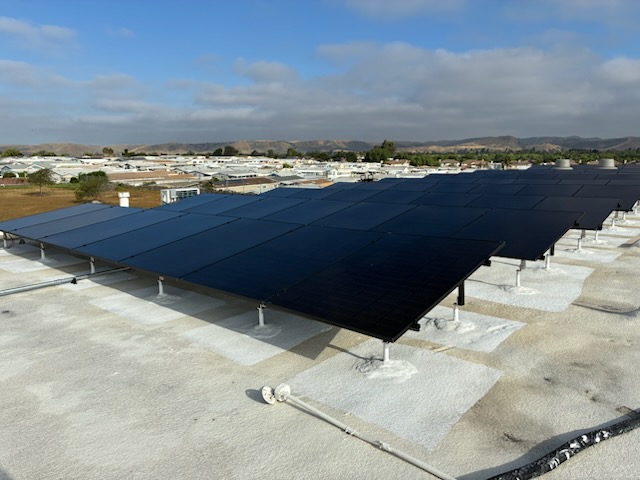
Launched in September 2025, the current phase  of the program is already nearing completion on multiple projects just six months in. Funded by Preserve Calavera in partnership with the San Diego Foundation and managed by Hammond Climate Solutions Foundation, the initiative is part of a broader effort to strengthen local climate action, build community resilience and advance equitable climate solutions. Funded projects include solar and battery installations for nonprofit facilities and low-income households, along with expanded food recovery efforts that reduce waste and emissions while increasing access to fresh, healthy food. 

‍

At the Boys & Girls Clubs of Northwest San Diego’s Oceanside Clubhouse, critical pre-installation improvements have been completed, preparing the site for a solar and storage system that will reduce long-term electricity use and allow the organization to reinvest savings into youth programs. Investments in youth-serving organizations are also creating long-term community benefits and supporting local union jobs. “This gift is about so much more than solar panels. It’s an investment in our community, our future, and the young people who walk through our doors every day. By reducing our energy costs, we can direct more resources where they have the greatest impact supporting youth,” said Marineke Vandervort, CEO. 

‍

Similarly, the North County Alano Club has begun installation of a solar and battery system that will significantly lower operating costs and emissions.

‍

“Since the 1960s, the North County Alano Club has been helping alcoholics and other addicts recover from a seemingly hopeless state of mind and body — serving an average 4,000 people each month in 2025,” said Dan McSwain, a representative from the organization. “We rely 100% on donations, usually $1 at a time, and operate on a very tight budget. The result of this grant is reducing our overall expenses by 25 percent, allowing us to not only survive but thrive for decades to come.”

‍

In addition to clean energy projects, the program is advancing climate and food equity through ProduceGood’s CropCircle Collective initiative, which has already recovered nearly 3,000 pounds of produce and is scaling operations across Oceanside.

‍

“ProduceGood is focused on climate and social equity. Through the generous support of the Greenhouse Gas Reduction Program, the organization will increase food recovery by 100% in Oceanside while increasing access to fresh produce for hundreds of families.”

‍

The program also expanded access to clean energy for low-income households. A few lucky families were able to have no-cost solar and battery systems installed in Oceanside’s Communities of Concern. These installations are expected to deliver more than 24 metric tons of annual greenhouse gas reductions while lowering energy bills and providing backup power during outages.

‍

“Through the Oceanside Greenhouse Gas Reduction Program, this funding enables the delivery of no-cost solar plus battery systems to Oceanside households, directly reducing local emissions while strengthening community resilience,” said Ben Airth, Policy Director at Freedom Forever. “By keeping climate dollars in the community, the program helps lower electric bills and ensures families can maintain power when the grid is stressed. We are honored to work alongside Preserve Calavera and Hammond Climate Solutions Foundation to make these projects possible and hope this success paves the way for similar climate investments in other cities.”

‍

These projects demonstrate how targeted, community-based climate investments can reduce emissions, lower costs, lessen stress on California’s aging electrical grid, offer energy resilience and deliver meaningful benefits to the community.

‍

Additional announcements are expected as projects reach completion and further impacts are realized.

‍

All Posts

Category
Select field
Thank you! Your submission has been received!
Oops! Something went wrong while submitting the form.
Biker riding in the city in front of shops

Biking as a Solution to the Climate Crisis

The San Diego Climate Hub hosted its second quarterly event, Biking a Solution to the Climate Crisis, on Thursday, December 10. The San Diego community engaged in an interactive discussion about how bicycling is one of many solutions to help reduce our CO2 emissions, which exacerbate the climate crisis and contribute to climate injustices. 

The San Diego Climate Hub hosted its second quarterly event, Biking a Solution to the Climate Crisis, on Thursday, December 10.  The San Diego community engaged in an interactive discussion about how bicycling is one of many solutions to help reduce our CO2 emissions, which exacerbate the climate crisis and contribute to climate injustices. 


The free event included a presentation with speakers from the nonprofit organizations Bike San Diego, Climate Action Campaign, SanDiego350 and Sierra Club San Diego, and the panel was moderated by Denice Williams with Black Girls Do Bike and the San Diego County Bicycle Coalition.  After the panel there was a Zoom breakout session where fellow activists were able to get to know each other and share about their interest in biking.

‍

San Diego is the eighth largest city in the nation yet ranks sixth for having the worst air pollution. Communities of concern, surrounded by freeways in San Diego, experience higher rates of asthma and pollution related-illnesses, and have a shorter lifespan than communities in other parts of the city.  This is an example of a climate injustice. More people who bike instead of drive dirty, gas vehicles can help reduce local air pollution, which was highlighted during the event. 


"Communities of color need to be prioritized for all sustainable transportation improvements that will ensure that they have more access to clean air and affordable transportation options,” said Bertha Rodriguez, the Assistant Organizer at Climate Action Campaign, who presented on Thursday.  “By centering equity and looking at biking through an intersectional lens, we can start breaking down the disparities caused by race, class, gender and ability in order to promote a more inclusive climate revolution."

‍
The San Diego Climate Hub is a center, located in Hillcrest, to strategize, collaborate and build collective power to stop the climate crisis and advance climate justice in the San Diego region. The nonprofit members include Bike San Diego, Climate Action Campaign, SanDiego350, San Diego Coastkeeper and Surfrider Foundation San Diego County, and it’s managed by Hammond Climate Solutions. The purpose of the Climate Hub is to catalyze collaborative local and regional solutions to stop the climate crisis, and quarterly events are a way to bring together activists to share education, resources and people power to create a brighter future.  

The next quarterly Climate Hub event will be in partnership with the San Diego Green New Deal Alliance on February 23 at 5:30 p.m. More details will be available at www.sdclimatehub.org.

‍

Read more