This website uses cookies to analyze site navigation and improve user experience.  We take your privacy seriously, and never collect any personally identifiable information, nor do we ever sell or share anonymized data with any third parties.  Click “Great!” to remove this banner.

Oceanside Greenhouse Gas Reduction Program Continues to Deliver Climate and Community Benefits

Foundation

Oceanside, CA  — The Oceanside Greenhouse Gas Reduction Program is delivering measurable progress by advancing clean energy, reducing greenhouse gas emissions and investing in community-serving organizations across the city.

Launched in September 2025, the current phase  of the program is already nearing completion on multiple projects just six months in. Funded by Preserve Calavera in partnership with the San Diego Foundation and managed by Hammond Climate Solutions Foundation, the initiative is part of a broader effort to strengthen local climate action, build community resilience and advance equitable climate solutions. Funded projects include solar and battery installations for nonprofit facilities and low-income households, along with expanded food recovery efforts that reduce waste and emissions while increasing access to fresh, healthy food. 

At the Boys & Girls Clubs of Northwest San Diego’s Oceanside Clubhouse, critical pre-installation improvements have been completed, preparing the site for a solar and storage system that will reduce long-term electricity use and allow the organization to reinvest savings into youth programs. Investments in youth-serving organizations are also creating long-term community benefits and supporting local union jobs. “This gift is about so much more than solar panels. It’s an investment in our community, our future, and the young people who walk through our doors every day. By reducing our energy costs, we can direct more resources where they have the greatest impact supporting youth,” said Marineke Vandervort, CEO. 

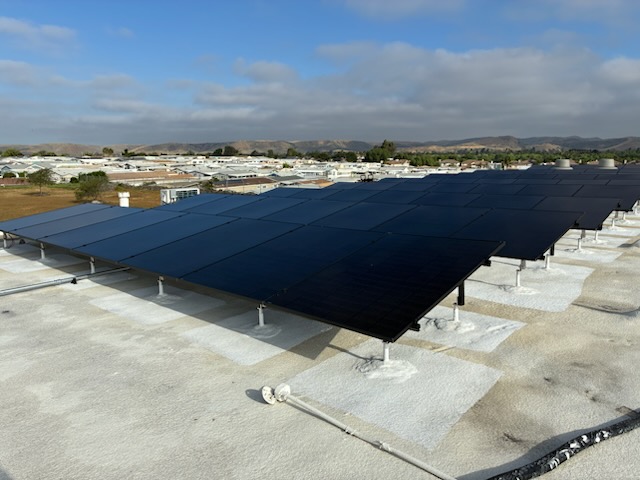
Similarly, the North County Alano Club has begun installation of a solar and battery system that will significantly lower operating costs and emissions.

“Since the 1960s, the North County Alano Club has been helping alcoholics and other addicts recover from a seemingly hopeless state of mind and body — serving an average 4,000 people each month in 2025,” said Dan McSwain, a representative from the organization. “We rely 100% on donations, usually $1 at a time, and operate on a very tight budget. The result of this grant is reducing our overall expenses by 25 percent, allowing us to not only survive but thrive for decades to come.”

In addition to clean energy projects, the program is advancing climate and food equity through ProduceGood’s CropCircle Collective initiative, which has already recovered nearly 3,000 pounds of produce and is scaling operations across Oceanside.

“ProduceGood is focused on climate and social equity. Through the generous support of the Greenhouse Gas Reduction Program, the organization will increase food recovery by 100% in Oceanside while increasing access to fresh produce for hundreds of families.”

The program also expanded access to clean energy for low-income households. A few lucky families were able to have no-cost solar and battery systems installed in Oceanside’s Communities of Concern. These installations are expected to deliver more than 24 metric tons of annual greenhouse gas reductions while lowering energy bills and providing backup power during outages.

“Through the Oceanside Greenhouse Gas Reduction Program, this funding enables the delivery of no-cost solar plus battery systems to Oceanside households, directly reducing local emissions while strengthening community resilience,” said Ben Airth, Policy Director at Freedom Forever. “By keeping climate dollars in the community, the program helps lower electric bills and ensures families can maintain power when the grid is stressed. We are honored to work alongside Preserve Calavera and Hammond Climate Solutions Foundation to make these projects possible and hope this success paves the way for similar climate investments in other cities.”

These projects demonstrate how targeted, community-based climate investments can reduce emissions, lower costs, lessen stress on California’s aging electrical grid, offer energy resilience and deliver meaningful benefits to the community.

Additional announcements are expected as projects reach completion and further impacts are realized.

All Posts

Category
Select field
Thank you! Your submission has been received!
Oops! Something went wrong while submitting the form.
Villa Lakeshore Apartments in Lakeside, which BQuest provided a SOMAH bride loan for, allowing the property to install solar, which saves tenants $1,600 a year on utility bills

California bill could restructure traditional incentive programs

New bill could restructure traditional incentive programs in California

It is no secret that traditionally, clean energy infrastructure has primarily been accessible to wealthy homeowners in California. More than a million homes and businesses have rooftop solar, but the state’s environmental justice communities, which are in the most polluted areas, have been left out. In order to reach the state’s climate and clean energy goals, it is necessary to provide clean energy access to everyone and a big part of how we get there is programs. 

The Solar on Multifamily Affordable Housing (SOMAH) Program was created by California Assembly Bill (AB) 693 introduced by then Assemblymember Susan Eggman in 2016, which included the largest investment of its kind in the nation - $1 billion over the next decade from five of the state's gas and electric  investor-owned utility companies greenhouse gas cap-and-trade auction proceeds to subsidize solar panels on multifamily affordable housing across the state. For tenants, this means reduced utility bills, better housing security and job training opportunities. For housing complex owners, the solar reduces common area electricity costs, reducing overhead expenses. The program had a very successful launch, becoming fully subscribed within the first 24 hours of opening the program with more than 240 applications representing 74MW of solar capacity. However, after the successful launch, the program has experienced a significant decrease in applications in subsequent years, only receiving a total of 20 applications in 2022. 

A required third-party evaluation of the program identified a number of barriers to program participation. A major barrier cited from property owners was gap financing. SOMAH Program projects can be lengthy, and the current incentive structure requires the property owner to float the rebate amount, which can be thousands of dollars to hundreds of thousands of dollars, sometimes for a year. The program recognized this issue and rolled at progress payments, which paid a portion of the incentive for certain project milestones, but this simply is not enough for some property owners. Recognizing the need for gap financing in order for these projects to participate in the program, Hammond Climate Solutions Foundation and BQuest Foundation began working together to provide no interest bridge loans for SOMAH projects, providing much needed funds for projects that would have otherwise not moved forward. After funding a handful of projects, BQuest realized they could scale this opportunity a lot more quickly and reach many more property owners by creating a loan guarantee instead of financing these projects on a one by one basis. A loan guarantee would allow the property owner to access the rebate on the front end, backed by a loan guarantee from BQuest, without putting ratepayer money at risk and allowing BQuest to scale their impact. 

In February 2023, Senator Eggman introduced Senate Bill (SB) 355, which expanded SOMAH Program eligibility to include tribal housing, housing owned by public agencies and increased the income threshold among other things. At this point, Hammond Climate Solutions Foundation and BQuest had already been involved in numerous meetings with the SOMAH Program administrators, the California Public Utilities Commission (CPUC) energy division staff, the Governor’s Office and were actively involved in the SOMAH proceeding at the CPUC and while support for this idea was given by all parties, implementing something like this had proven to be slightly more difficult. Since SB 355 addressed the lack of applications in the SOMAH program and expanded eligibility, we met with Senator Eggman’s staff and proposed an amendment to the bill to include language for a loan guarantee and not only was the language added with no opposition, it was signed by Governor Newsom on October 7! 

This is a huge win for California and an opportunity to prove that incentive programs structured in a way that provides the rebate on the front end can work and will eliminate barriers to participation. You can read the full bill text here.     

Read more
Photo of the largest rooftop community solar project in the U.S, located in Carroll County, Maryland

California could lead the nation in Community Solar, if the utilities stop fighting it

California leads the nation in rooftop solar installations but has fallen short in creating a viable community solar market. Now, that can change.

California leads the nation in rooftop solar installations but has fallen short in creating a viable community solar market. Last year, Assembly Bill 2316 (AB 2316) unlocked the potential for California to lead the nation in community solar over the coming years by finally creating legislation that will tell the utilities to create a program that will credit customer’s accounts for renewable electricity produced elsewhere and set a compensation for the bill credit. Now, the utilities are attempting to derail a new proposed program called the Net Value Billing Tariff (NVBT).  

The NVBT would finally allow California renters, nearly 17 million people, and low-income households to take advantage of bill savings while using clean energy. There are a couple of things that make the NVBT different from failed community solar programs in California. The first is that it would require the installation of batteries with community solar projects, to alleviate the strain on the grid during peak hours (currently 4-9 p.m.), once demand is higher and solar energy being exported to the grid is dropping off as the sun sets. The second is that AB 2316 requires that low-and-moderate income households make up a majority of subscribers, ensuring that this program will benefit those who are paying a disproportionate amount of income towards skyrocketing electricity rates. Finally, this program has no caps on capacity, meaning the doors are truly open for developers that want to build these projects. 

One of the biggest advantages of community solar is that the solar power systems can be placed on rooftops and in parking lots, and the systems don’t require large plots of land like utility scale solar does. Community solar can also support local clean jobs and stimulate the regional economy. With the state’s target to procure 85 gigawatts of clean energy by 2035, there is already a large amount of projects in the desert trying to connect to the grid, however community solar projects can be a lot closer to the customers they serve, meaning they are able to connect to the lower voltage grid, eliminating the need for more costly and fire-causing transmission and distribution lines.    

It is no surprise that the only arguments against a program that could potentially replace dangerous peaker plants comes from the state’s three investor-owned utilities. The main argument coming from the utilities is that community solar should be treated like large-scale generators that have a different set of rules and guidelines than other distributed energy resources like rooftop solar. 

The California Public Utilities Commission proceedings tend to move pretty slowly, so there isn’t a definitive date for when we can expect the NVBT to be voted on by the commissioners. California has now passed the September 26 deadline for states to apply to $7 billion in federal funding as part of the Solar For All grants and having a community solar program in place would have made California’s application a lot more competitive.

While the utilities have successfully blocked attempts to make solar more accessible, including the decision to slash the state’s net energy metering program last year, hopefully the state can get it right on this one.

Read more

Let’s Go! San Diego Transit Relief

Do you live in San Diego County? How satisfied are you with the current state of roads and public transportation? You may be approached, if you have not been already, with these questions by a friendly volunteer in the next few months as the November 2023 deadline to submit measures for the 2024 ballot quickly approaches.

The County’s transit infrastructure has been in decline for many years now. Local governments in the region have poured millions of taxpayers’ dollars into expanding freeways, but we know from looking at Los Angeles and other regions that more lanes increase the number of cars on the road. More cars on the road means more air pollution, which disproportionately burdens the health and well-being of BIPOC communities and communities of concern. 

It’s time for us to come together and create change. Let’s Go! San Diego is a campaign focused on building a better future for local families by delivering essential transportation improvements: reducing congestion, upgrading highway safety, fixing roads and making public transit more reliable and accessible. Some of the other projects that Let’s Go! will fund include:

  • Purple trolley line extending from South County to Sorrento Valley
  • Moving Rail Line connecting to San Diego International Airport
  • Increased service on bus and trolley routes
  • Habitat preservation and stormwater upgrades

Vehicles make up 50 percent of greenhouse gas emissions in California, 80 percent of nitrogen oxide pollution and 90 percent of diesel particulate matter pollution. Thus, an improvement to our transportation system means progress for meeting local and statewide climate goals

So, how will this be funded? The measure proposes a half-cent increase to the County’s sales tax, meaning for every $20 you spend, $0.10 will go towards improving our transit system. Tax increases are not often appealing, however, we wholeheartedly believe that the impact of this measure far outweighs the individual costs. The lack of viable transportation alternatives for County residents limits access to jobs, education, medical offices and recreational facilities. San Diego County needs more and better options, which is why it is crucial that residents bring this measure into next year’s ballot.

The broad coalition supporting this important effort is composed of over 30 nonprofits, unions, environment groups and businesses. Launched by SanDiego350 and the Environmental Health Coalition, this grassroots effort continues to grow in strength. Check out the complete list of endorsements here: Let’s Go! San Diego Endorsements.

If you haven’t signed the petition yet, visit one of the locations here to bring this measure one step closer to becoming a reality. Also, consider joining the campaign to stay up to date on our progress and spread awareness to friends, family and neighbors so that San Diego may deliver long-awaited transit improvements to the County.

Photo Credit: Let’s Go! San Diego

Read more